
From the creek bed to the display shelf.
Where to find good rough, what it is, and how to turn it into something that shines. Plain-English guides for the whole hobby, from the gravel bar to the polish barrel.
The polish side
Rough in, shine out.
Four grits, three to six weeks, and one barrel humming in the garage. Know what to expect, and what to buy, before you start.
Four stages, one stone
The full process →A rotary tumbler does the same thing a river does, only faster. Each stage swaps in a finer grit until the scratches are too small to catch light.
Coarse
Medium
Fine
Polish
Start with a pillar
Three guides · everything else branches offLatest guides
Field notes
-
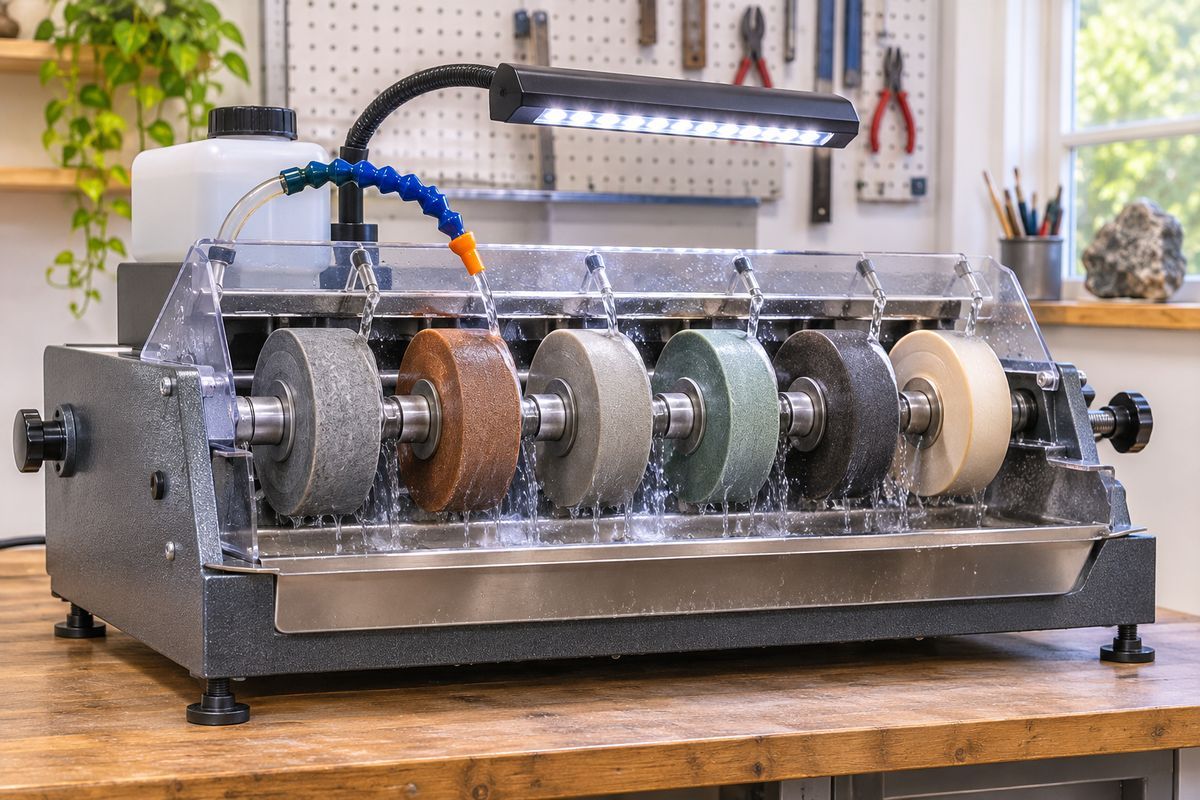
Best Cabbing Machine for Beginners
A cabbing machine grinds and polishes a piece of rough stone into a cabochon, a smooth, dome-shaped stone used in rings, pendants,…
-
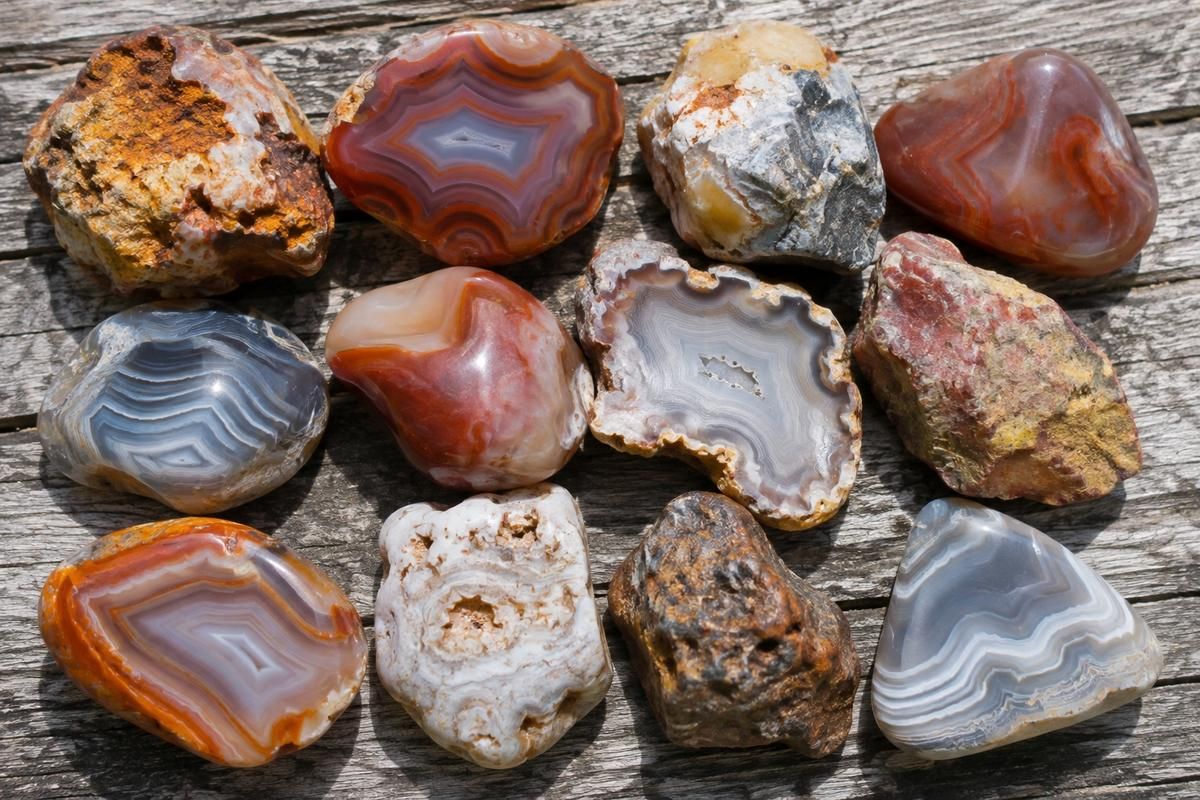
Types of Agate: How to Identify Them and Where to Find Them
The main types of agate by pattern and by place, how to tell agate from jasper, how to spot dyed agate, and…
-
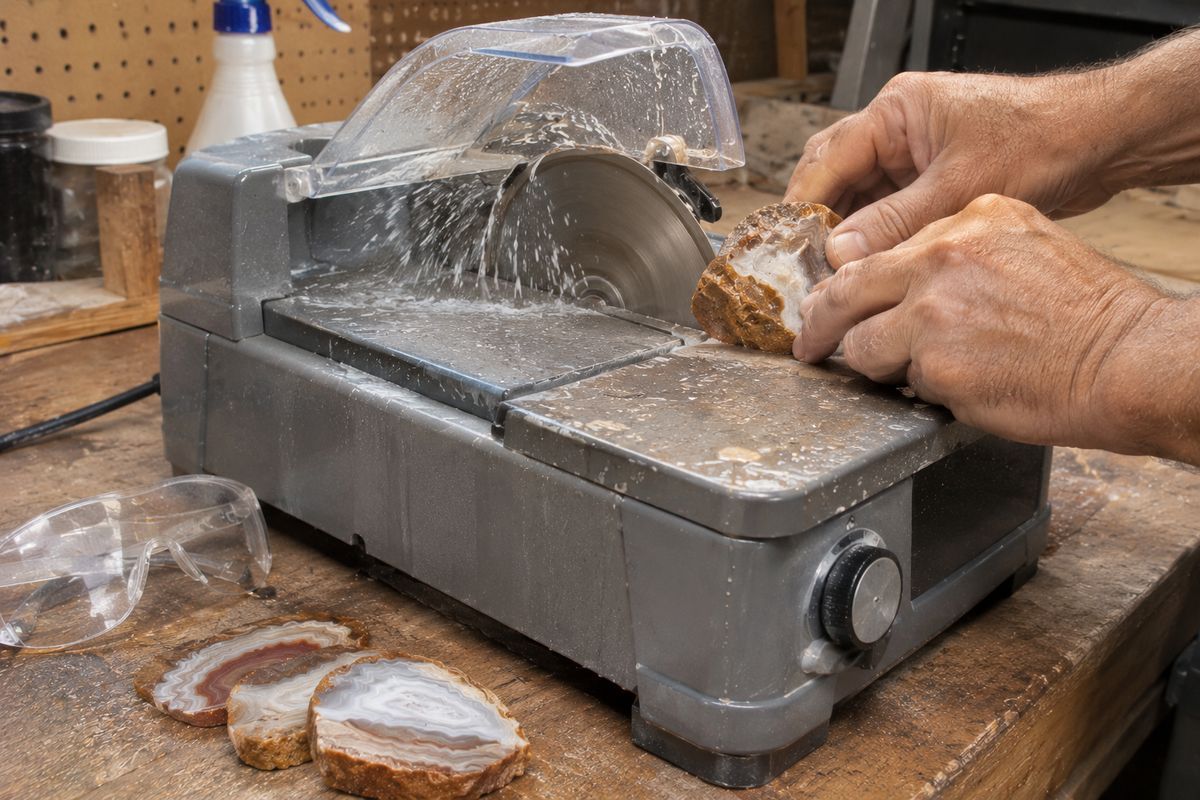
Best Lapidary Saw for Beginners: Trim, Slab and Tile Saws
The best lapidary saw for most beginners is a 6 inch trim saw. Compare trim vs slab saws, blade sizes, water vs…
-
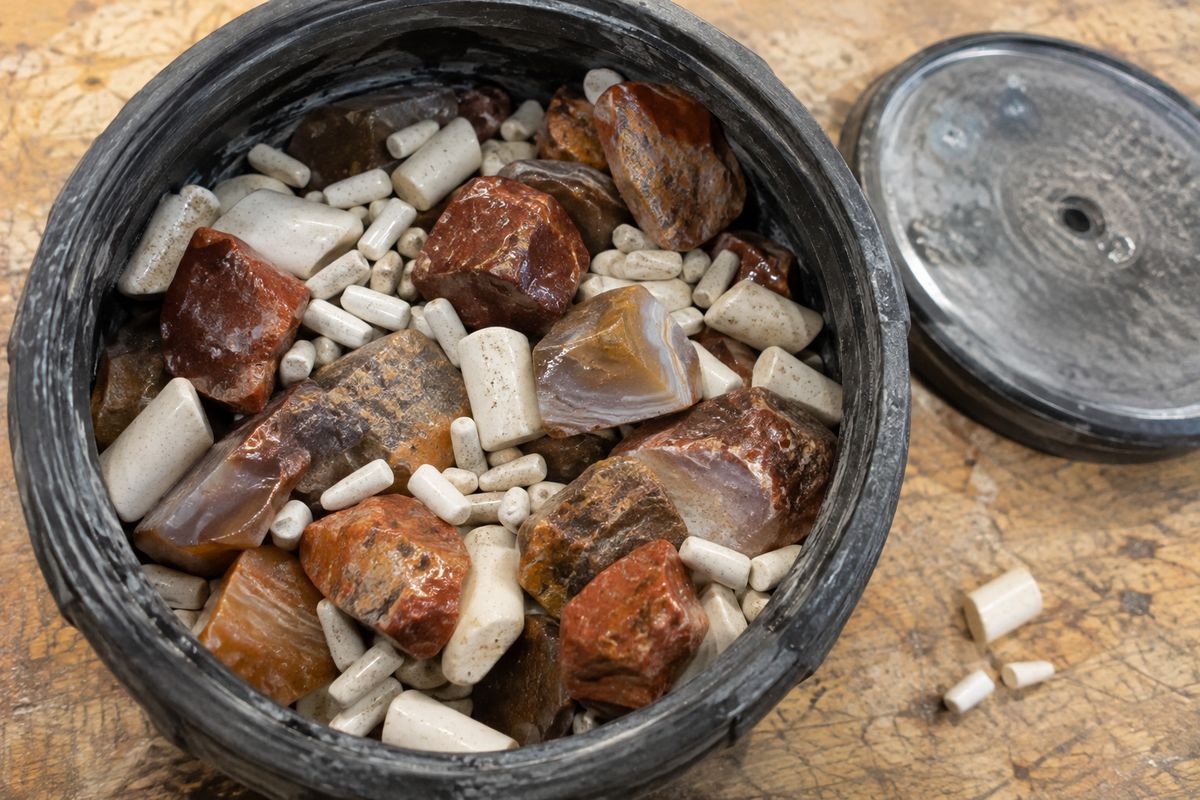
Rock Tumbler Media: Ceramic vs Plastic and How Much to Use
What rock tumbler media does, ceramic vs plastic pellets, how much to use for each stone type, a media planner, and 5…
-
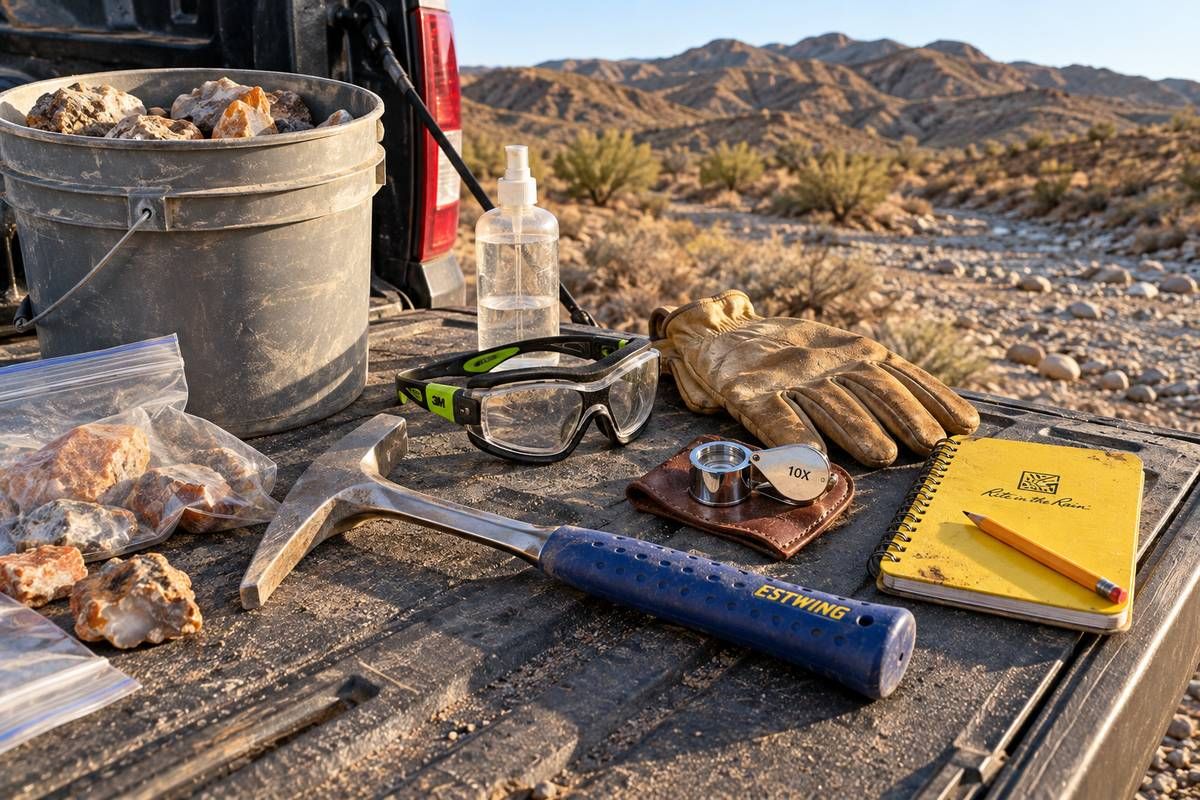
Rockhounding Tools: The Beginner Kit and What to Add Later
A beginner’s rockhounding tools fit in one bag: a one-piece rock pick, safety glasses, work gloves, a 10x hand lens, a field…
-
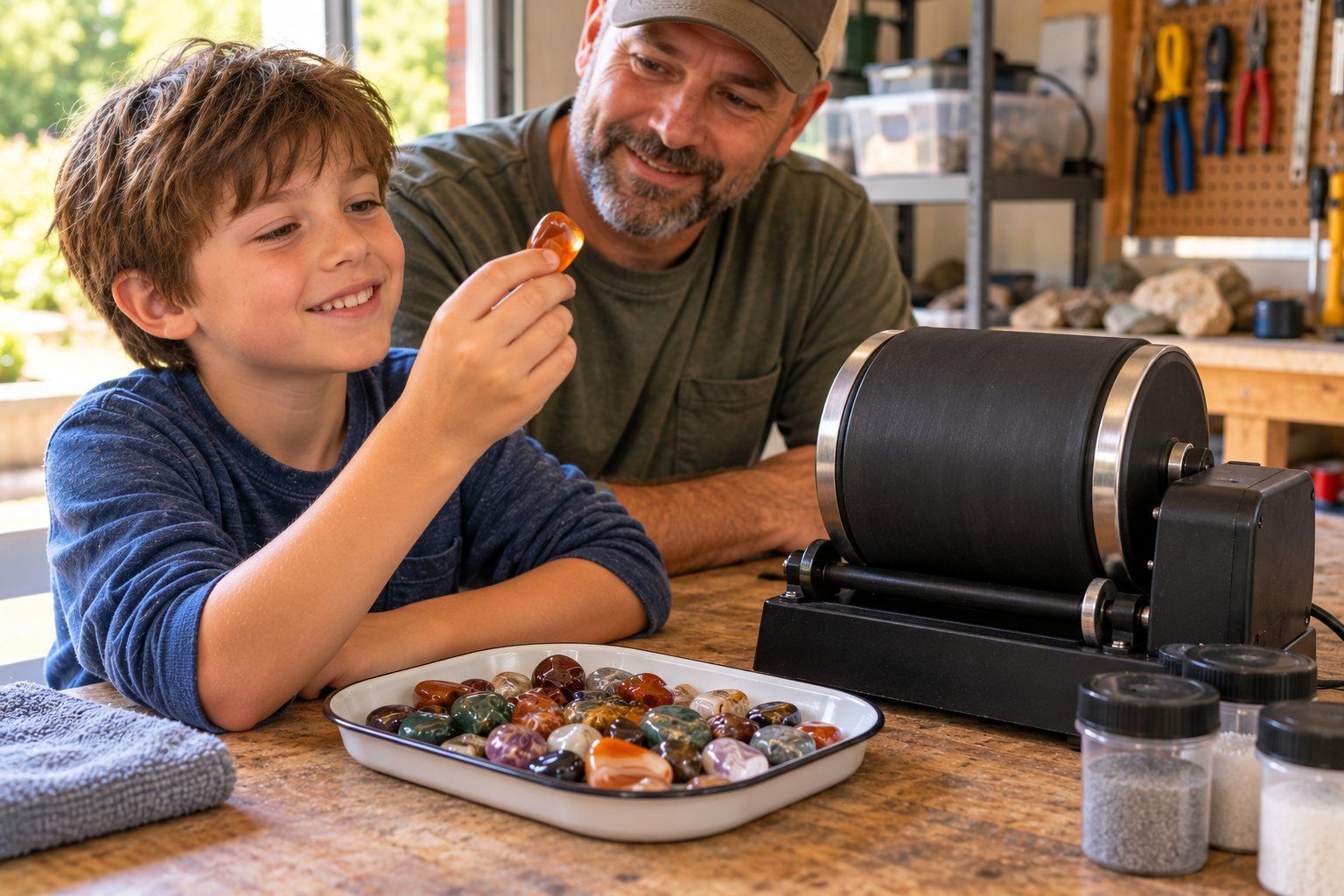
Best Rock Tumbler for Kids: 6 Kits Compared by Age and Safety
The best rock tumbler for kids is a small rotary tumbler with a quiet, leak-proof barrel, an automatic shut-off timer, and a…
No rewritten product pages.
Most “best rock tumbler” lists are Amazon listings with the words shuffled. Ours start from the manuals, the grit charts and the questions people actually ask, and we say plainly when nobody publishes a number.
- Specs from the source. Barrel capacity, motor and grit figures come from the maker’s own documents.
- Recipes by rock type. Agate, jasper, obsidian and beach stones each get their own grit schedule.
- Troubleshooting first. Dull results, leaking lids and slipping belts get straight answers.
- Honest about the trade-offs. Noise, run time and cost are on every recommendation.