

Rockhounding means looking for interesting rocks, minerals, and fossils and bringing a few home. You don’t need a degree or expensive gear to start. This guide to rockhounding for beginners covers what to bring and where you’re allowed to collect. It also explains how to recognize stones worth keeping and how to stay safe while you look.
The short version: start on a river gravel bar or a public beach that allows collecting. Bring safety glasses, gloves, a small hammer, and a bucket. Check who manages the land before you take anything, and keep only what you’ll use.
In This Guide
What Is Rockhounding?
Rockhounding is the hobby of finding and collecting rocks, minerals, gemstones, and fossils. Some people hunt for agates on a beach. Others split open geodes, sift creek gravel for garnets, or look for fossils in road cuts. Many collectors also polish their finds in a rock tumbler.
Most of the hobby is walking slowly and looking closely. The rest is learning the rules for each place you visit, because those rules change from one piece of land to the next.
Rockhounding for Beginners: The Gear You Need
A first trip needs very little. This short list covers most outings:
- Safety glasses. Chips fly when you strike a rock, so wear them every time you use a hammer.
- Work gloves. Broken rock has sharp edges.
- A rock hammer. A geologist’s hammer has a flat face for striking and a pick or chisel end for prying. Our rock hammer guide explains which tip and weight to choose.
- A bucket or sturdy bags. Rocks are heavy, so carry less than you think you can.
- A 10x hand lens. This small magnifier, also called a loupe, reveals crystals and grain you can’t see with the naked eye.
- A notebook and a marker. Write down where and when you found each piece.
- Water and a spray bottle. Wetting a dusty stone shows its true color and pattern.
Two cheap test tools help with identification later: a steel nail and an unglazed porcelain tile, called a streak plate. The next sections explain how to use them. For what to buy now and what to add later, see our rockhounding tools guide.
Gear for this guide4 items

Eye protection
3M SecureFit 400 safety glasses with foam gasket
Wear them every time you use a hammer
Check Price on Amazon
Hand protection
Wells Lamont cowhide work gloves
Protect your hands from sharp edges
Check Price on Amazon

Looking closer
Ade Advanced Optics 10x triplet loupe
Shows crystals and grain you can’t see by eye
Check Price on AmazonWhere You’re Allowed to Collect
Land rules are the most important part of rockhounding for beginners, and the part most new collectors skip. In the United States, the agency that manages the land sets the rules. The same stone can be legal to pick up in one spot and illegal a mile away.
| Land type | General rule | What to check |
|---|---|---|
| Bureau of Land Management (BLM) | Reasonable amounts for personal use, with hand tools | Closures, mining claims, petrified wood limits |
| National forest | Often allowed for personal use, but some forests require a permit | Call the local ranger district |
| National park | Prohibited in nearly all parks | Look, photograph, and leave it |
| State park | Usually prohibited, with a few exceptions | The park’s own rules |
| Private land | Only with the owner’s permission | Get it in writing if you can |
BLM Land
The Bureau of Land Management says the public can generally collect reasonable amounts of rocks, mineral specimens, and semiprecious gemstones on its land. You can’t collect for commercial use. Collecting is generally not allowed at developed recreation sites, on active mining claims, or where someone else owns the mineral rights.
BLM’s recreational rockhounding guide sets a specific limit for petrified wood: 25 pounds plus one piece per day, and no more than 250 pounds per year. It also limits you to hand tools and metal detectors. Vertebrate fossils, such as bones and teeth, need a research permit, and artifacts more than 100 years old can’t be removed without a BLM permit.
National Forests
Rules differ from forest to forest. Some allow casual collecting for personal use without a permit. Others require one. For example, the Monongahela National Forest in West Virginia requires a permit to collect rocks. It also bans collecting in streams, wetlands, and wilderness areas, and it says you can’t sell or trade the rock. Check the website of the forest you plan to visit, or call its ranger district.
National Parks and State Parks
Federal rules for the National Park System prohibit removing or disturbing a mineral resource, under 36 CFR 2.1. Leave everything where you find it. A few parks in Alaska are rare exceptions that allow limited collecting for personal use. Most state parks have similar rules, though a few parks allow collecting. Check each park before you go.
Private Land
Quarries, gravel pits, farm fields, and creeks that cross private property all need the owner’s permission. Ask first, and get it in writing if you can. Pay-to-dig sites are private land that welcomes collectors, which makes them a good choice for a first trip.
Rockhounding for Beginners: Where to Start Looking
The best beginner spots are places where water or digging has already exposed lots of loose stones. You can look over a lot of pebbles quickly without breaking a single rock.
- River gravel bars. Stream gravel banks are some of the best places to look for agates.
- Beaches. Look after storms, when waves bring up fresh pebbles.
- Pay-to-dig sites. You pay a fee and keep what you find, with no guesswork about the rules.
- Club field trips. Local rock and mineral clubs lead trips to places members already have permission to visit.
- Geode beds and creeks. Our guide to where to find geodes covers the best US spots and the collecting rules at each.
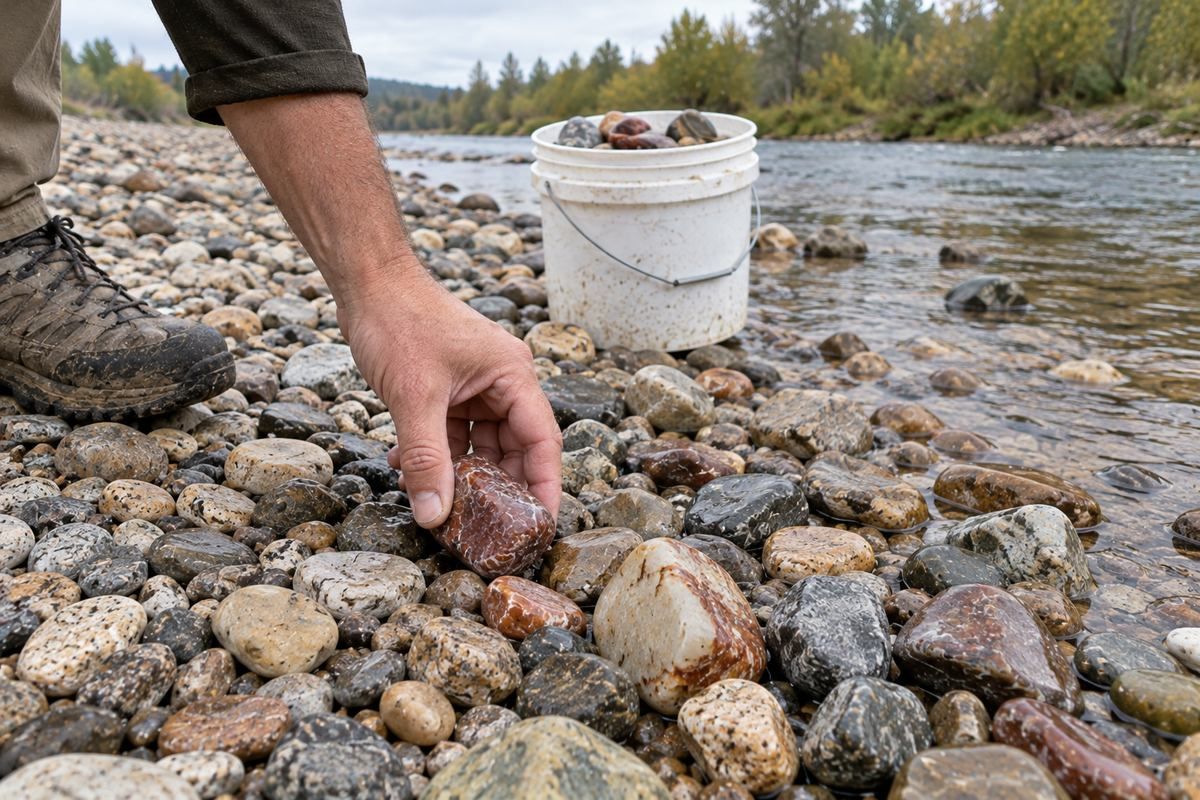
Club trips are one of the best parts of rockhounding for beginners, because someone else has already arranged permission. The American Federation of Mineralogical Societies has a map to help you find a club near you, and its member clubs follow a shared code of ethics.
How to Identify What You Find
Color alone can fool you. Geologists use a few simple tests that work in the field or at the kitchen table.
Hardness
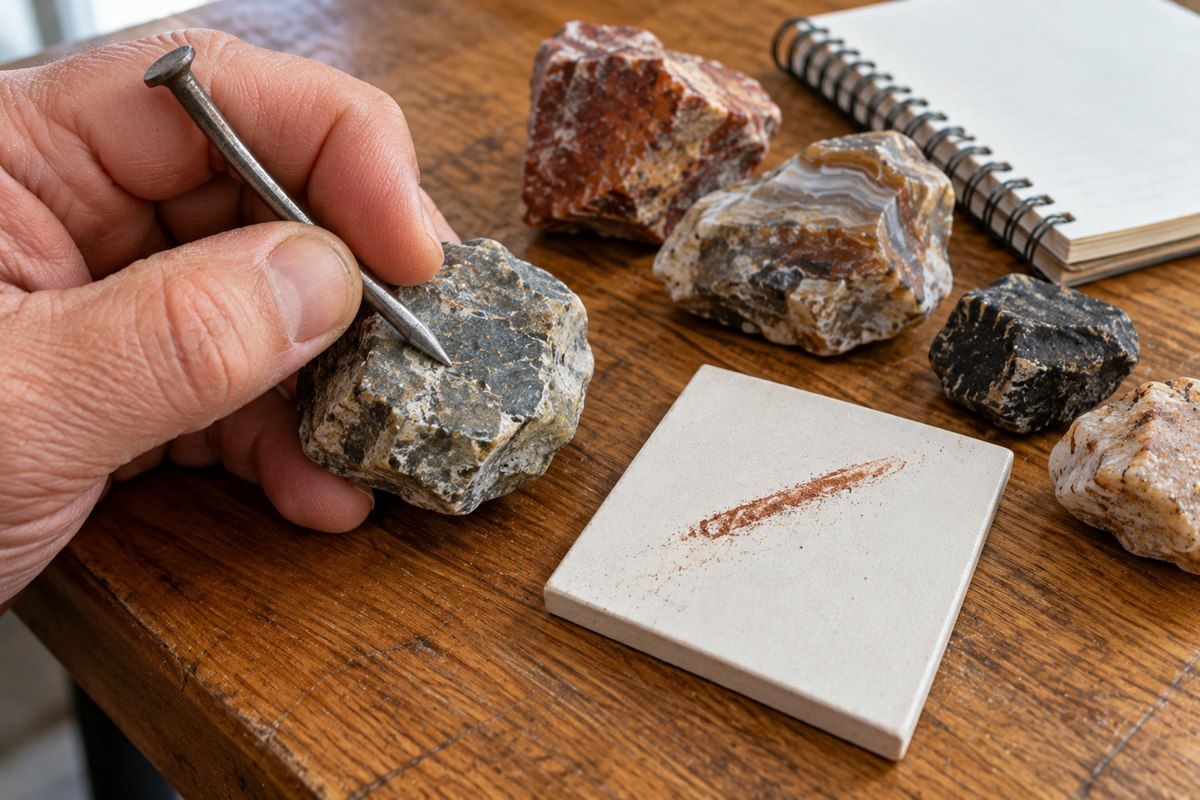
Try to scratch the stone with a steel nail. A steel nail rates about 5 on the Mohs hardness scale. If the nail doesn’t scratch the stone, it’s harder than 5. Quartz, agate, and jasper all pass this test, which is one reason they polish so well.
Streak and Luster
Rub the stone across the back of an unglazed tile. The color of the powder it leaves is called the streak. Streak is most useful for metallic minerals. Most other stones, including quartz, leave a white streak or none at all. Luster describes how the surface reflects light, such as glassy, waxy, dull, or metallic.
How to Spot an Agate
Agate is the stone many beginners hope to find first. The Minnesota Department of Natural Resources (DNR) gives these clues:
- It lets light through. Hold it up to the sun or a flashlight. Agate glows at the edges.
- It has a waxy shine, especially on chipped or broken spots.
- It’s often stained red, orange, or yellow by iron.
- The surface is often pitted, and the bands may barely show on the outside.
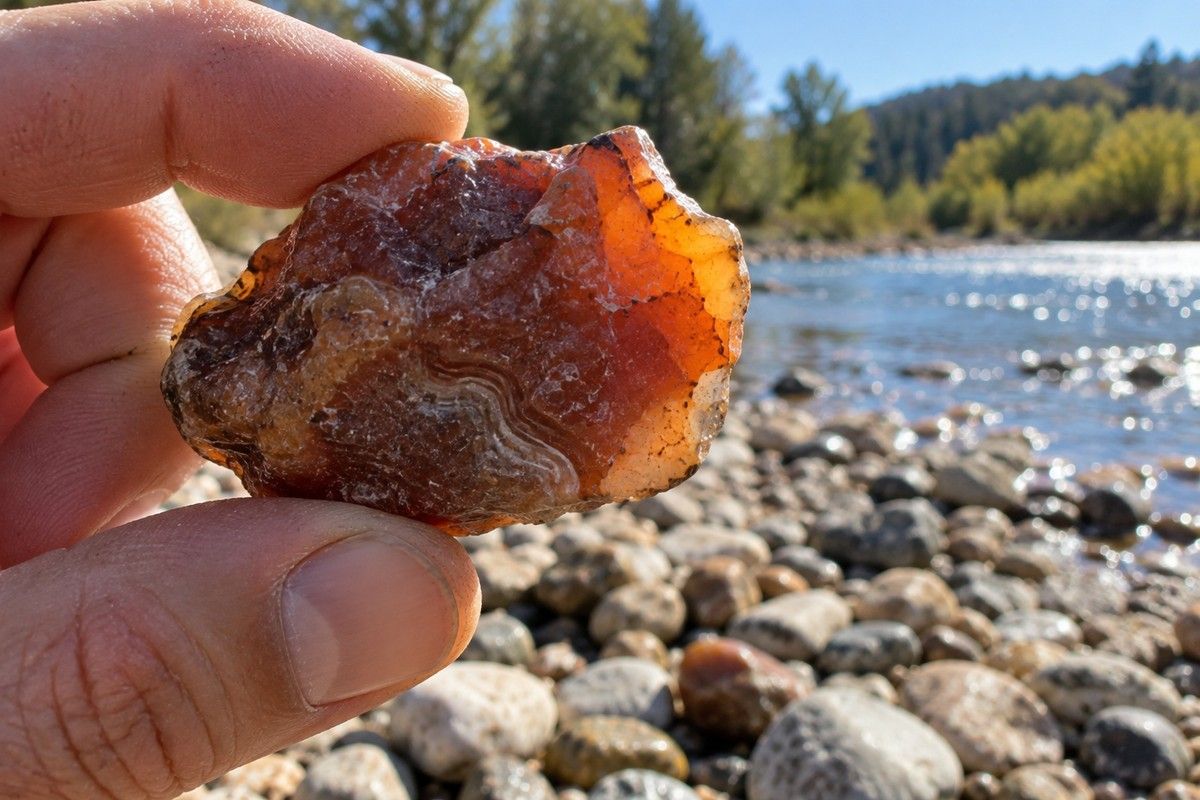
Michigan’s environmental agency adds a useful test. A banded stone that doesn’t let light through is likely jasper or banded sandstone, not agate. Both are still worth keeping, and jasper tumbles beautifully. To learn the kinds you might find, see our types of agate guide.
Stay Safe in the Field
Most trips are calm, but a few hazards deserve respect. Safe rockhounding for beginners starts with these habits:
- Stay out of old mines. The federal Stay Out, Stay Alive campaign warns of hidden shafts, bad air, unstable rock, and flooded pits at abandoned mine sites.
- Wear safety glasses whenever you strike or split rock.
- Watch your footing on wet rocks, loose slopes and stream banks.
- Stay well back from traffic at road cuts, and only collect where stopping is legal.
- Tell someone where you’re going, carry water, and check the weather before remote trips.
Collect Responsibly
Good habits keep collecting sites open for everyone, and they’re part of rockhounding for beginners from the first trip. Fill any holes you dig, pack out your trash, and close gates behind you. Take only what you’ll use, and leave the rest for the next person. If the rules say personal use only, don’t sell what you find.
What to Do With Your Finds
Rinse each stone and let it dry. For caked mud, rust stains or delicate crystals, our guide on how to clean rocks matches the method to the mineral. Label it with the place and date, either on a tag or in your notebook, because unlabeled rocks quickly lose their story.
Then sort your keepers by hardness. Hard stones such as agate, jasper, and quartz are ideal for polishing. Our guide on how to tumble rocks walks through the four grit stages step by step. To polish one special stone by hand, see how to polish rocks without a tumbler.
Where to Go Next
After you finish this guide to rockhounding for beginners, the next step is usually turning rough stones into polished ones. Start with How to Tumble Rocks, then see the rock tumbler buying guide when you’re ready to choose a machine.
Frequently Asked Questions
Do you need a permit to go rockhounding?
It depends on who manages the land. BLM land generally allows you to collect a reasonable amount for personal use without a permit, while some national forests require one. Private land always needs the owner’s permission.
Can you take rocks from a national park?
Almost never. Federal rules for the National Park System prohibit removing minerals and other natural features. A few Alaska parks allow limited personal collecting, but everywhere else, take photos instead.
What tools do beginners need for rockhounding?
Safety glasses, gloves, a rock hammer, a bucket or bags, a 10x hand lens, and a notebook will cover most first trips. A steel nail and an unglazed tile help with identification at home.
Is rockhounding safe for kids?
Yes, with close supervision. Choose easy places like gravel bars, beaches, or pay-to-dig sites. Have everyone wear safety glasses when hammering, and stay away from old mines and steep slopes.
How can you tell if a rock is an agate?
Hold it up to a light. Agate is translucent, so light glows through its edges. It often has a waxy shine, a pitted surface, and red, orange, or yellow iron staining.