
Learning how to clean rocks without damaging them starts with a gentle approach. Soak them in water, scrub with a soft brush, then wash with a little dish soap and rinse. That handles most dirt, mud, and sand. Only reach for a chemical when you have a specific problem, like orange iron stains on quartz, and only after you know what the rock is. Vinegar and other acids dissolve calcite, some minerals break down in water, and a few common cleaners can release toxic gas when they mix. Matching the method to the mineral is what keeps a good find from turning into a ruined one.
Field to Polish is a participant in the Amazon Services LLC Associates Program, an affiliate advertising program designed to provide a means for sites to earn advertising fees by advertising and linking to Amazon.com.
This guide covers every level, from a bucket of water to an iron stain soak. It also includes a chart showing which methods each rock type can handle.
In This Guide
Start With Water, a Soft Brush and Patience
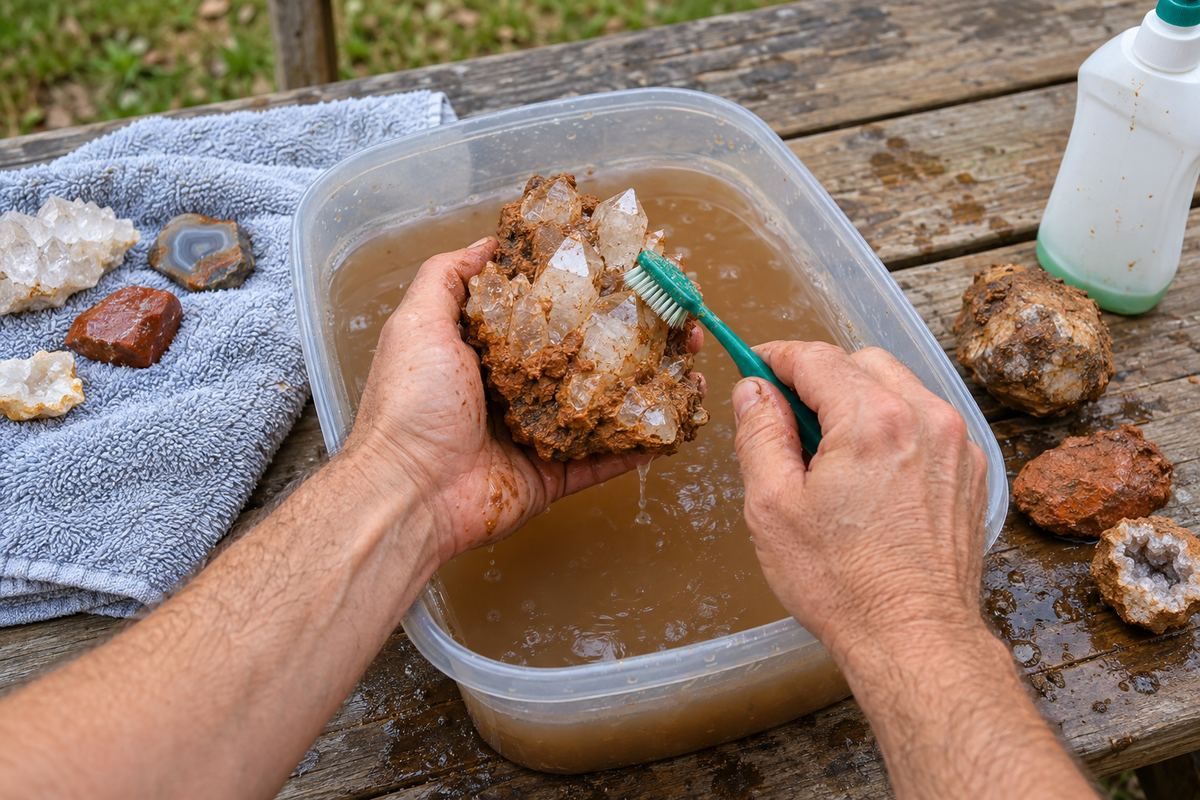
If you are learning how to clean rocks from the field, know that most come home covered in plain dirt, and plain water does most of the work. The Bureau of Land Management’s rockhounding activity for kids keeps it simple: wash the dirt off with water and an old toothbrush. Experienced collectors follow the same order, just with more care.
Les Presmyk, a mineral dealer who wrote a cleaning primer for the New Mexico Mineral Symposium, lays out the basic routine. Wash in soapy tap water, rinse in tap water, then give a final rinse in distilled water so no mineral film dries on the surface. He also says to keep the water about the same temperature as the specimen, since a sudden change can crack some minerals.
Here is how that looks at home:
- Soak the rocks in a plastic tub of room-temperature water for a few hours, or overnight for caked mud. Dried clay softens and falls away on its own.
- Scrub with a soft toothbrush. Use an old artist’s brush for crystals and tight spots, and a wooden toothpick or dental pick to lift dirt out of cracks.
- Add a few drops of dish soap to fresh water and scrub again if the rock feels greasy or still looks dull.
- Rinse in clean tap water, then dip or rinse in distilled water.
- Let the rocks air dry on a towel, out of direct sun.
People reach for stiff wire brushes, knives, and pressure washers when the gentle method feels slow. They scratch soft minerals and can knock crystals off a specimen. Presmyk warns that high-pressure spray damages fuzzy minerals and minerals that split easily along flat planes, such as calcite. If a rock is still dirty after a soak and a brush, soak it longer before you scrub harder.
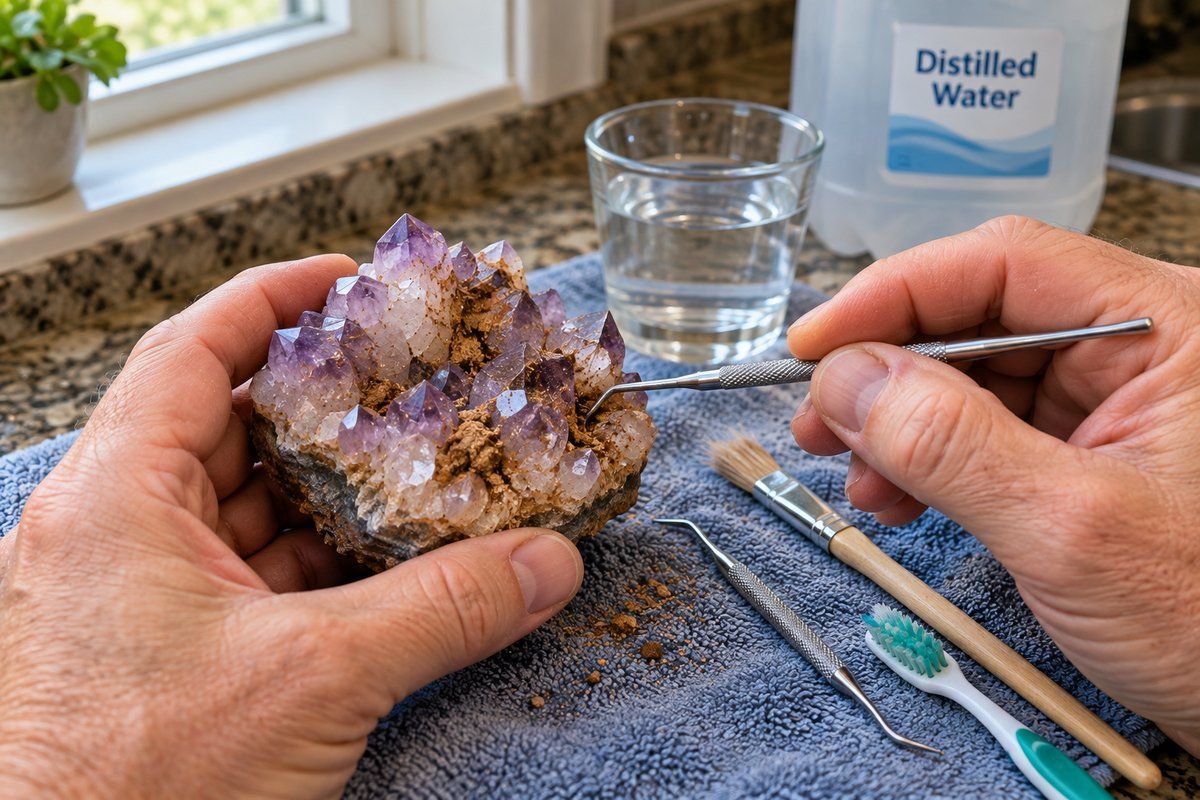
Figure Out What You Have First
Every chemical step depends on what the rock is made of. You do not need a lab for this. Three quick checks tell you most of what you need to know.
Hardness. The Mohs scale ranks minerals from 1 to 10 by how easily they scratch one another. The U.S. Geological Survey (USGS) lists gypsum at 2, calcite at 3, fluorite at 4, and quartz at 7. A fingernail scratches gypsum. A steel knife scratches calcite and fluorite but not quartz. Agate and jasper are forms of quartz, so they are hard and tough. If a knife scratches it easily, it needs gentle handling.
The fizz test. Put one drop of vinegar on a hidden spot and watch closely. Test the main rock or crystal, not the crust on top. Bubbles mean the rock contains calcite or another carbonate. The University of Kansas explains that vinegar dissolves the calcium carbonate in limestone and releases carbon dioxide bubbles. If the main rock fizzes, keep every acid away from it, then rinse that spot well.
Cracks and coatings. Examine the rock in good light. A stone full of cracks, or one with a crust of tiny crystals on top, can lose pieces in a strong soak or an ultrasonic cleaner. Those rocks get the gentlest treatment, no matter what they’re made of.
If you are still not sure what you found, our rockhounding for beginners guide covers simple ways to identify common rocks. When in doubt, treat a rock as if it were soft and acid-sensitive. Water and a soft brush are the safest start for almost any rock. The main exception is rock salt, which dissolves in water.
Which Cleaning Method Fits Your Rock
This chart sorts common finds by what they can safely take. Start in the first column and only move to the right if the gentler step did not work.
| Rock or mineral | Hardness | Water and soap | Vinegar | Iron stain treatment | Ultrasonic cleaner | Watch out for |
|---|---|---|---|---|---|---|
| Quartz, amethyst, agate, jasper, chalcedony | About 7 | Yes | Yes, to remove calcite crust | Iron Out or oxalic acid | Solid stones only | Cracked stones can lose chips |
| Calcite, limestone, marble, fossils in limestone | 3 | Yes | No | No | Avoid | Any acid dissolves it. Scratches easily |
| Fluorite | 4 | Yes, gently | Not needed | No oxalic acid. Test Iron Out on a hidden spot | No (GIA) | Soft. Splits along flat planes |
| Gypsum and selenite | 2 | Brief rinse only | No | No | No | A fingernail scratches it. Skip soaking |
| Halite (rock salt) | About 2.5 | No water | No | No | No | Dissolves in water and absorbs moisture |
| Pyrite and marcasite | 6 to 6.5 | Quick rinse, dry fast | Not needed | No | Avoid | Humidity can start “pyrite disease” |
| Malachite and azurite | 3.5 to 4 | Yes, cool water | No | No | No (GIA, malachite) | Copper carbonates. Acids attack them |
| Turquoise and opal | 5 to 6.5 | Yes, gently | No | No | No (GIA) | Can crack or lose color |
| Geodes | Varies by lining | Yes | Only if nothing in it fizzes | Only if nothing in it fizzes | Avoid | Many geodes hold calcite crystals |
Geodes deserve a second look because they mix minerals. Many have a quartz lining, but plenty hold calcite crystals in the center. If you are cleaning a freshly cracked geode, our guide on how to open a geode covers the first rinse. Do the fizz test on one crystal before any acid touches it.
How to Remove Iron Stains From Rocks
Orange, rusty, and brown coatings are the most common reason people move past soap and water. These stains are iron oxide, and they are especially common on quartz crystals dug from red clay. Two products handle most of them: Iron Out, a rust stain remover sold for sinks and toilets, and oxalic acid, sold in some wood bleaches and deck brighteners. Check that the label lists oxalic acid.
Iron Out: the place to start
Iron Out is a powder, and the maker’s safety data sheet lists sodium hydrosulfite as its main ingredient. Rock collectors use it because it pulls iron stains off quartz without being a strong acid. It still needs careful handling. The safety sheet warns that it can cause serious eye damage. It can also cause breathing problems if you inhale the dust. The sheet lists acids and oxidizers as things it must not be mixed with. Bleach and hydrogen peroxide are both oxidizers.
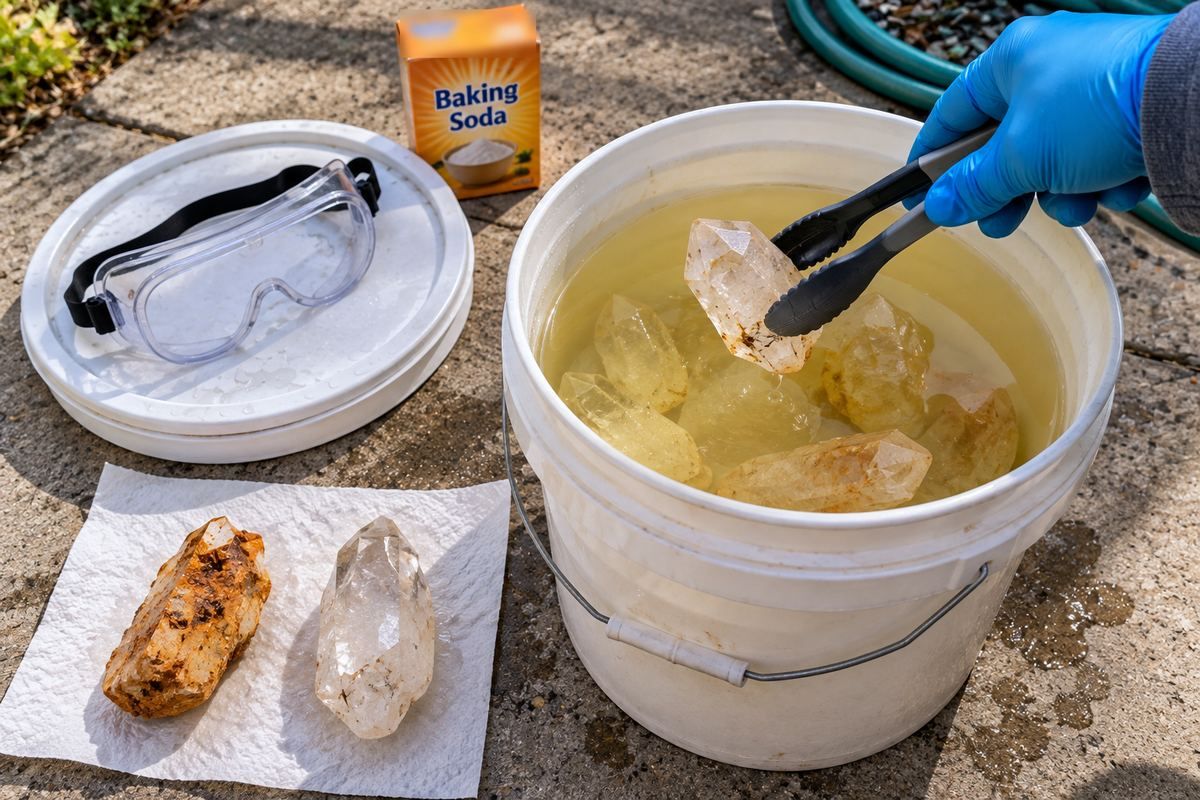
Work outside or in a well-ventilated spot. Mix a weak solution in a plastic bucket, add the rocks, cover loosely, and check once a day. Take the rocks out as soon as the stain is gone, rinse them well, and let them soak in clean water before drying. Use it only on quartz family stones. Keep it away from anything that fizzed in the vinegar test.
Oxalic acid: stronger, and for quartz only
Oxalic acid removes heavier iron stains, and many quartz collectors rely on it. It is also the most dangerous thing in this guide. The National Institute for Occupational Safety and Health (NIOSH) lists eye burns, skin irritation, and kidney damage among its effects. The National Oceanic and Atmospheric Administration (NOAA) notes that swallowing about 5 grams has caused death, and that it can react violently with bleach. Keep it locked away from children and pets.
Charles Carter of the Georgia Mineral Society gives a careful method for cleaning quartz. Start with about 2 tablespoons of oxalic acid per half gallon of water. Use glass, ceramic, or plastic containers, never metal. Wear rubber or neoprene gloves and work outdoors. The simplest approach is to set the covered bucket in the sun on a warm day, 70 degrees Fahrenheit or more, and wait. Heat speeds it up, but Carter says to keep it below 180 degrees and calls boiling very dangerous. Never heat it in a pot or on a stove you use for food, and let warm rocks cool slowly in the solution so they do not crack. When you are done, neutralize the used solution by slowly adding baking soda, since it foams. Neutralizing does not make the liquid safe to drink or pour on soil, so follow your local rules for getting rid of it.
Never use oxalic acid on a rock that contains calcite. Carter warns that it also removes calcite, and Presmyk adds that on calcium minerals it leaves an insoluble deposit that will not wash off. Presmyk also suggests soaking a specimen in plain water for several hours before any acid. A rock already full of water absorbs less acid, which makes rinsing it out easier afterward.
What Vinegar Will and Will Not Do
Vinegar is a weak acid, and it works on exactly one kind of problem. It dissolves calcite and other carbonates. Presmyk notes that collectors use vinegar, citric acid, and Lime Away to strip calcite crusts off acid-tolerant minerals, such as quartz. A quartz crystal with a white, chalky coating that fizzes is a good candidate for a vinegar soak.
That same strength is why vinegar ruins the wrong rock. It will etch and slowly dissolve calcite crystals, limestone, marble, fossils preserved in limestone, and copper carbonates like malachite. It does nothing for iron stains or for plain dirt that soap would remove. So vinegar is a targeted tool, not an all-purpose cleaner.
If the main rock doesn’t fizz and only the white crust does, soak it in plain white vinegar and check often. Rinse it well, then soak it in water with a spoonful of baking soda to neutralize any acid left in the cracks before it dries.
Cleaners That Should Never Meet
Rock cleaning often happens in steps, and that is where people get hurt. A stone that sat in bleach and then goes into an acid bath can release toxic gas in a closed garage. The Tennessee Poison Center at Vanderbilt University Medical Center warns that mixing bleach with vinegar produces chlorine gas, and mixing bleach with ammonia produces chloramine gas.
| Never combine | What can happen | Source |
|---|---|---|
| Bleach and vinegar (or any acid) | Releases chlorine gas | Tennessee Poison Center |
| Bleach and ammonia | Releases chloramine gas | Tennessee Poison Center |
| Bleach and oxalic acid | Can react violently | NOAA CAMEO Chemicals |
| Iron Out and acids (vinegar, oxalic acid) | Listed as incompatible by the maker | Iron Out safety data sheet |
| Iron Out and bleach or hydrogen peroxide | Listed as incompatible with oxidizers | Iron Out safety data sheet |
| Oxalic acid and calcite | Leaves a crust that will not wash off | Les Presmyk, NM Mineral Symposium |
The simple habit that prevents all of this is a full rinse and a plain water soak between every step. Use separate, labeled containers for each product, and wash your tools before you switch.
Bleach and Hydrogen Peroxide for Algae and Lichen
Rocks from creeks, lakes, and beaches sometimes carry green algae, moss, or crusty lichen. Bleach and hydrogen peroxide both attack that kind of growth, but each has limits.
Hydrogen peroxide breaks down organic matter. The USGS uses it in the lab to remove organic material from samples before identifying minerals. It is not harmless to every rock, though. A study on cleaning algae from cave walls found that 15 percent hydrogen peroxide killed the growth but also dissolved calcite and limestone about ten times faster than plain water did. Drugstore peroxide is much weaker, at 3 percent. On quartz, agate, and jasper, drugstore peroxide is a reasonable choice for green stains. On calcite and limestone, stick with a brush. Peroxide is also an oxidizer, so treat pyrite and other metallic minerals with extra caution and keep it away from Iron Out.
Bleach works on algae too, but it adds the mixing risk described above. If you use it, use it alone, on hard quartz family stones only, rinse thoroughly, and soak the rock in clean water before any other step.
Why We Skip Muriatic Acid
Some rock guides recommend muriatic acid, a hardware-store name for hydrochloric acid, to dissolve calcite quickly. We do not recommend it for beginners. NIOSH lists irritation of the nose and throat, coughing and choking from breathing it, and skin and eye burns. It is highly corrosive to most metals, and safety sheets for consumer muriatic acid warn that contact with metal can form flammable hydrogen gas. The fumes also rust tools and nearby metal.
For a calcite crust on quartz, vinegar does the same job more slowly and much more safely. A long vinegar soak is worth the wait. If a specimen truly needs stronger treatment, a local rock club or an experienced dealer is a better option than a first try in the backyard.
Ultrasonic Cleaners, Heat and Other Shortcuts
Ultrasonic jewelry cleaners shake dirt loose with sound waves, and they work well on solid quartz. They can also damage many stones. The Gemological Institute of America (GIA) says ultrasonic cleaners create heat and pressure. It lists fluorite, malachite, opal, turquoise, lapis lazuli, moonstone, topaz, and several other gems as stones that should not go in one. GIA recommends warm, soapy water for those instead.
Heat is another risk that is easy to miss. Presmyk notes that sudden temperature changes damage some minerals and that warm water can dull azurite. Boiling rocks, running them through a dishwasher or setting a wet stone in hot sun can crack anything with hidden fractures. Room temperature water and patience work better than any shortcut.
Drying and Storing Clean Rocks
Let clean rocks air dry completely before you box them up, especially anything porous or full of cracks. The final distilled-water rinse helps, since tap water can leave a cloudy film as it evaporates.
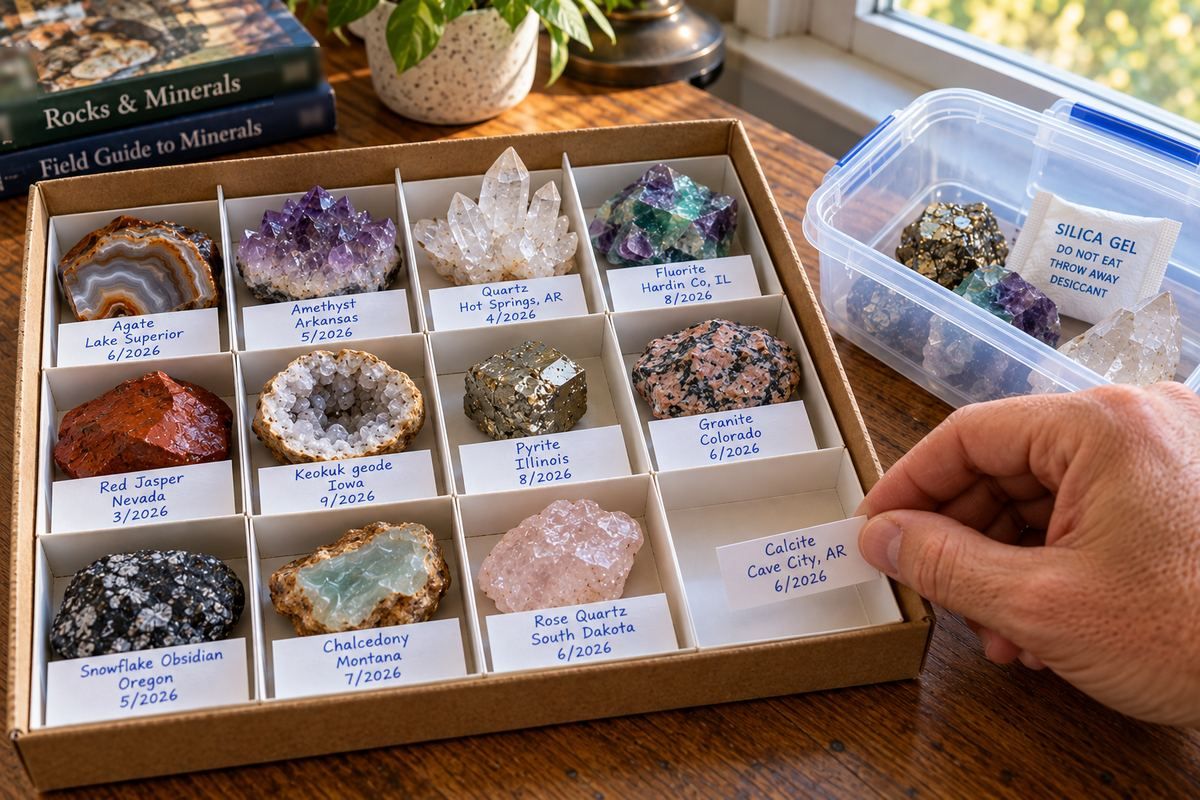
A few minerals need special storage. The National Museum of Ireland notes that halite absorbs moisture from the air and that humidity can trigger “pyrite disease,” a slow crumbling of pyrite and marcasite. Keep those in a dry spot, ideally in a sealed container with a silica gel packet. Presmyk adds that sunlight darkens some minerals, so a shelf out of direct sun is the safer home for a collection.
This is also a good time to record where each rock came from. A label with the place and date makes a specimen far more interesting later. If your clean rocks are headed for a tumbler, our guide on how to tumble rocks picks up from here. Our list of the best rocks for tumbling shows which finds are worth putting in the barrel. To shine a single stone by hand, see how to polish rocks.
Safety Gear and Cleanup
Water and soap need no special gear. Chemical cleaning does. Wear chemical-resistant gloves, such as nitrile or neoprene, and goggles that seal around your eyes, since a splash of oxalic acid or Iron Out solution can cause a serious eye injury. Work outdoors or with a fan pulling air away from you. NIOSH recommends having a way to flush your eyes nearby when working with oxalic acid, so keep a jug of clean water within reach.
Use plastic or glass containers that you never use for food, and label every one. Keep chemicals and soaking buckets out of reach of children and pets. Neutralize acid solutions by adding baking soda slowly before disposal. Never pour chemicals onto a garden or into a creek, and check your local rules for household chemical disposal.
Tools Worth Having
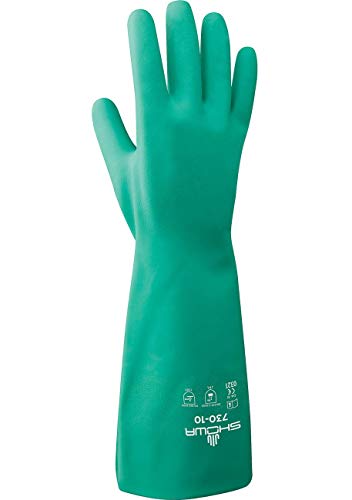
Most of what you need is already in the kitchen: plastic tubs, old toothbrushes, dish soap, and a jug of distilled water. For tighter spots and iron stains, a few more items help. A set of stainless steel dental picks lifts dirt from cracks and between crystals. Iron Out Powder Rust Stain Remover is the gentler of the two common iron stain treatments. For any chemical step, add SHOWA 730 nitrile chemical resistant gloves and a pair of Uvex Stealth OTG goggles, which seal around the eyes and fit over glasses.
Gear for this guide4 items


Hand protection
SHOWA 730 nitrile chemical resistant gloves
For any chemical soak
Check Price on Amazon
How to Clean Rocks: Common Questions
What is the best way to clean rocks?
For most rocks, water, a soft toothbrush, and a few drops of dish soap are the best cleaners. Soak first to loosen mud, then scrub and rinse. Save chemicals for specific problems, like iron stains on quartz.
What will vinegar do to rocks?
Vinegar dissolves calcite and other carbonates. It can remove a chalky calcite crust from quartz, but it will etch and slowly dissolve calcite crystals, limestone, marble, fossils in limestone, and malachite. It does not remove iron stains.
Does hydrogen peroxide clean rocks?
Hydrogen peroxide breaks down organic matter, so it can help with algae and moss on hard stones like quartz and agate. It isn’t safe for calcite or limestone, and you should never mix it with Iron Out or use it right after another chemical without a full rinse.
How do you get rust stains off rocks?
Soak quartz family stones in a weak Iron Out solution, or use oxalic acid for heavier stains, with gloves, goggles, and good ventilation. Never use either on rocks that fizz in vinegar, since they contain calcite.
Can you clean rocks with bleach?
You can use diluted bleach on hard quartz-family stones to remove algae, but use it alone and rinse thoroughly. Never combine bleach with vinegar, ammonia, oxalic acid, or Iron Out, because those mixes can release toxic gas or react violently.
How do you clean rocks from the beach?
Soak beach rocks in fresh water to draw out salt and sand, changing the water a few times, then scrub with a soft brush and dish soap. Rinse in distilled water and let them dry completely before storing.
The Bottom Line
Most rocks need only a soak, a soft brush, and a little soap. Before you move to anything stronger, identify the rock with a scratch and a drop of vinegar. Use Iron Out or oxalic acid for iron stains on quartz. Save vinegar for calcite crusts on stones that can take acid. Calcite and other soft minerals need only water and a brush. Gypsum gets a quick rinse, and halite gets a dry brush with no water. Rinse fully between steps and never mix cleaners. Knowing how to clean rocks this way protects your best finds. This guide is based on published research and safety guidance, and we have not tested these methods ourselves. Try any new method on a small hidden spot or a less important rock first.