
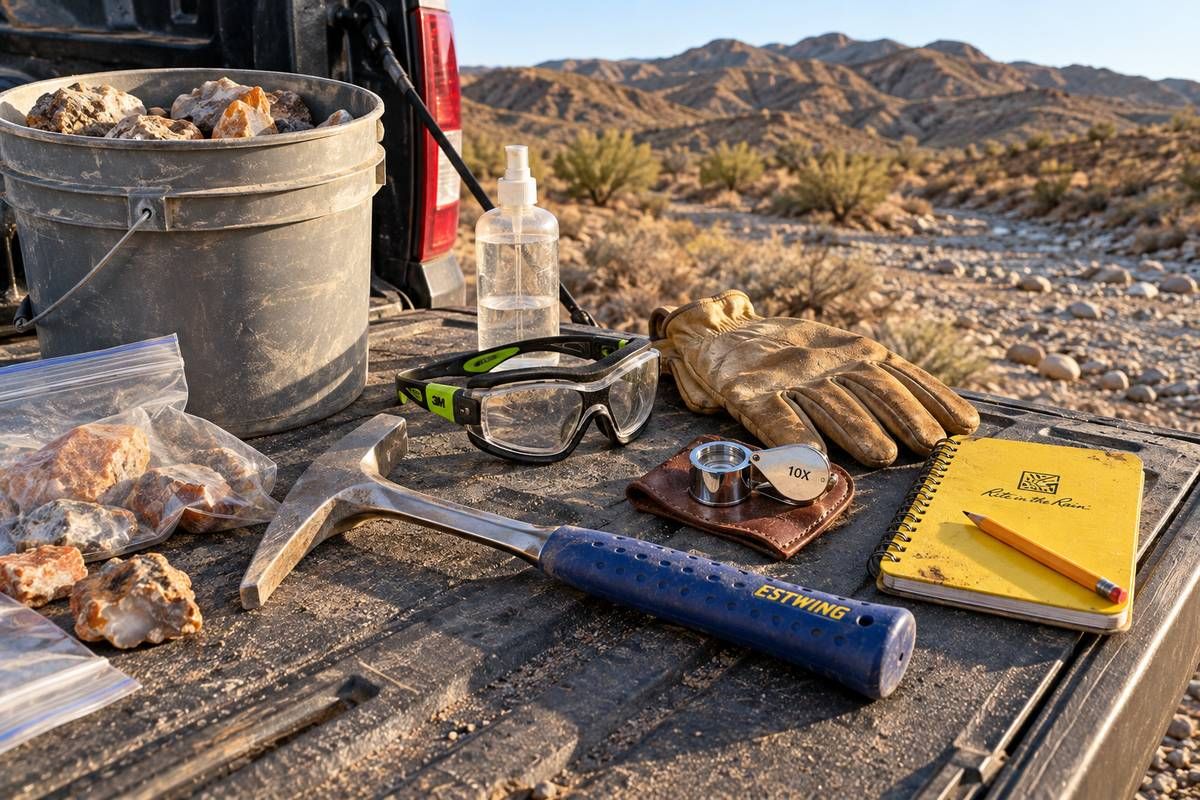
A beginner’s rockhounding tools fit in one bag: a one-piece rock pick, safety glasses, work gloves, a 10x hand lens, a field notebook, and something to carry rocks in. Add a crack hammer, a pry bar, sifting screens, or a UV light only when your collecting spot calls for them. Most beginners buy too much gear before they know what kind of collecting they like.
Field to Polish is a participant in the Amazon Services LLC Associates Program, an affiliate advertising program designed to provide a means for sites to earn advertising fees by advertising and linking to Amazon.com.
This guide is research-based. We have not used these tools ourselves. Specs come from the makers and the Amazon listings, and collecting rules come from the agencies that manage the land.
In This Guide
Quick Picks
- Best first tool: Estwing E3-22P Rock Pick
- Eye protection: 3M SecureFit 400 Safety Glasses with Foam Gasket
- Hand protection: Wells Lamont Cowhide Leather Work Gloves
- Seeing crystals up close: Ade Advanced Optics 10x Triplet Loupe
- Recording your finds: Rite in the Rain No. 540F Geological Field Book
- Driving chisels and breaking big rock: Estwing B3-3LB Crack Hammer
- Opening cracks and seams: Estwing GP-18 Gad Pry Bar
- Creek and beach gravel: SE 13.25 Inch Stackable Classifier Set
- Hunting rocks that glow: Convoy S2+ 365nm UV Flashlight with Filter
The Beginner Rockhounding Kit at a Glance
Start with the first group of rockhounding tools. The second group is for when you know where you like to collect.
| Tool | What it does | When to buy |
|---|---|---|
| Rock pick (rock hammer) | Splits rock, pries loose pieces, digs | First trip |
| Safety glasses | Stops flying chips | First trip |
| Work gloves | Protects hands from sharp edges | First trip |
| 10x hand lens | Shows crystals and grain up close | First trip |
| Field notebook and pencil | Records where each piece came from | First trip |
| Bucket or sturdy bag | Carries rocks | First trip |
| Spray bottle of water | Shows true color on dusty rock | First trip |
| Crack hammer | Drives chisels, breaks big rock | When you work hard rock or geodes |
| Gad pry bar | Opens cracks and seams | When you work road cuts or ledges |
| Classifier screens | Sorts gravel by size | When you dig creek or beach gravel |
| 365nm UV flashlight | Finds rocks that glow | When you hunt fluorescent minerals |
Build Your Kit by Trip Type
Pick the kind of trip you are planning. The checklist shows the core kit plus the extra tools that trip needs.
Rockhounding Kit Checklist
Choose a trip type to see what to pack.
Rockhounding kit checklist by Field to Polish · fieldtopolish.com
The Core Rockhounding Tools Every Beginner Needs
These five cover almost every first outing. Each one is a tool you will still use years from now.
Pick 01Best first tool
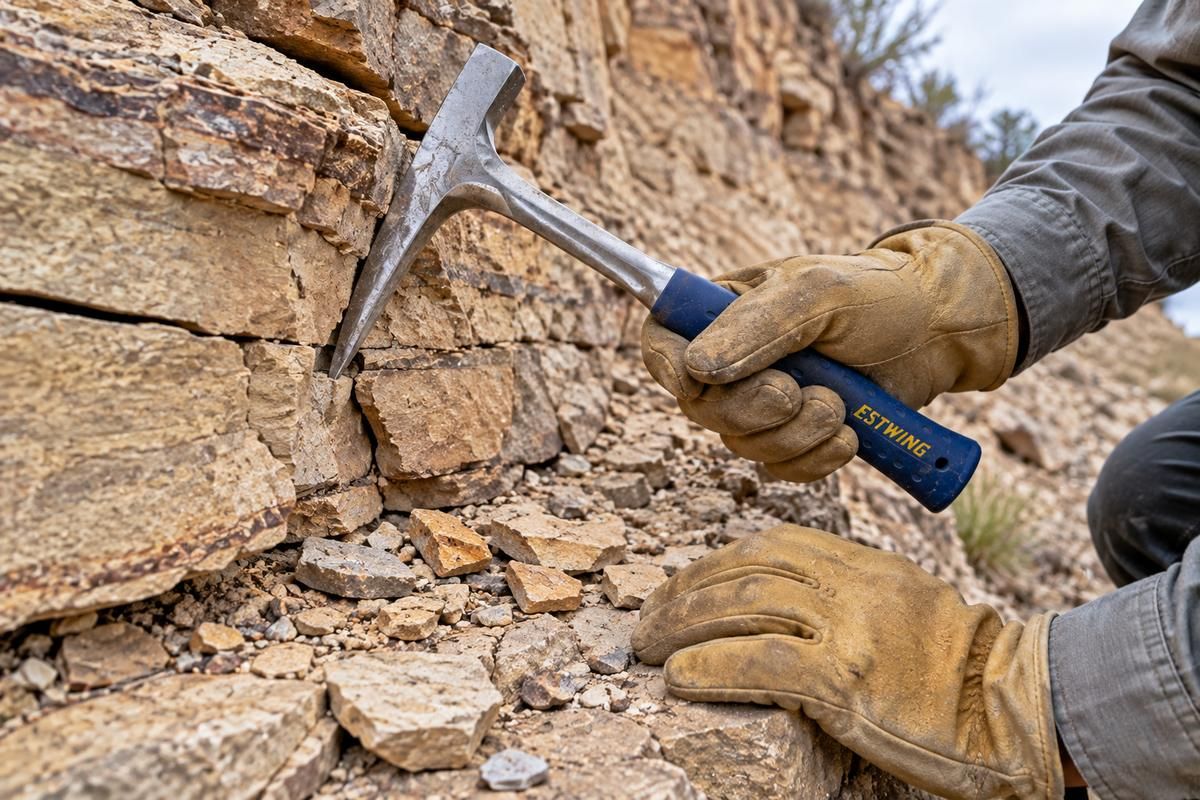
Estwing E3-22P Rock Pick

The Estwing E3-22P is the rock hammer most guides start with. It has a flat face for striking and a pointed tip for prying and cracking. Estwing forges the head and handle from one piece of steel, so the head can’t come loose like it can on a wood handle.
Most guides call 22 ounces a good all-around weight for adults. If you want a lighter hammer, or a chisel tip for layered rock, our rock hammer guide compares the sizes and tips.
- Weight: 22 oz
- Tip: pointed pick
- Build: one-piece forged steel
- Grip: shock reduction grip
- Made in: USA (Rockford, Illinois)
Pick 02Eye protection
3M SecureFit 400 Safety Glasses with Foam Gasket

Every time steel hits rock, chips fly. The 3M SecureFit 400 with foam gasket has a soft foam seal around the lens that helps keep chips and grit from coming in at the sides.
3M says the SecureFit 400 series meets the ANSI Z87.1 impact-rating requirement, and the polycarbonate lens blocks 99.9 percent of UV.
- Standard: ANSI Z87.1, impact rated (per 3M)
- Lens: clear polycarbonate
- Seal: removable foam gasket
- UV: blocks 99.9 percent (per 3M)
Pick 03Hand protection
Wells Lamont Cowhide Leather Work Gloves

Fresh broken rock is sharp. A plain pair of leather work gloves like the Wells Lamont cowhide gloves protects your hands while you dig, carry, and sort.
Leather holds up better than cloth against rough rock. The adjustable wrist helps keep dirt and sand out when you dig in gravel.
- Material: grain cowhide leather
- Wrist: adjustable closure
- Use: digging, carrying, sorting
Pick 04Seeing crystals up close
Ade Advanced Optics 10x Triplet Loupe

A 10x hand lens is the most common magnifier for geology fieldwork. The Ade Advanced Optics 10x triplet loupe uses three bonded lenses, which keeps colors true and edges sharp across the view.
Stronger loupes, like 30x or 60x, show a smaller area and are harder to hold steady outdoors. Start with 10x. Hold the lens close to your eye, then bring the rock up until it comes into focus.
- Power: 10x
- Lens: triplet, 21 mm (per model name)
- Case: leather case with snap
Pick 05Recording your finds
Rite in the Rain No. 540F Geological Field Book

A rock without a location is just a rock. The Rite in the Rain No. 540F is a weatherproof field book made for geology, so a wet glove or a splash from the creek will not ruin your notes.
Write the date, the place, and what you saw next to it. Number each find and write the same number on the bag. Use a pencil or all-weather pen, since normal ballpoints don’t write well on wet paper.
- Pages: 160 numbered
- Extras: 20 pages of reference material
- Paper: weatherproof, recyclable
- Cover: hard cover
Rockhounding Tools to Add as You Go
Buy these once you know the kind of collecting you enjoy. Each one solves a problem the core kit cannot.
Pick 06Driving chisels and breaking big rock
Estwing B3-3LB Crack Hammer

A rock pick can tap a chisel, but a short, heavy hand sledge like the Estwing B3-3LB crack hammer does that job better and gives more force on big rock.
It is also the usual tool for opening geodes. Never hit it against another hammer. Metal chips can break off and fly.
- Weight: 3 lb head
- Build: one-piece forged steel
- Use: chisels, geodes, large rock
- Grip: shock reduction grip
Pick 07Opening cracks and seams
Estwing GP-18 Gad Pry Bar

Many good pieces sit in a crack you cannot reach with a hammer. The Estwing GP-18 gad pry bar has a wedge end for prying and a pointed end for chipping.
It is a better choice for prying than a chisel. Chisels are made to be struck, not levered, and prying with one can bend or snap it.
- Length: 18 in
- Ends: wedge pry end and pointed tip
- Build: solid steel
- Made in: USA
Pick 08Creek and beach gravel
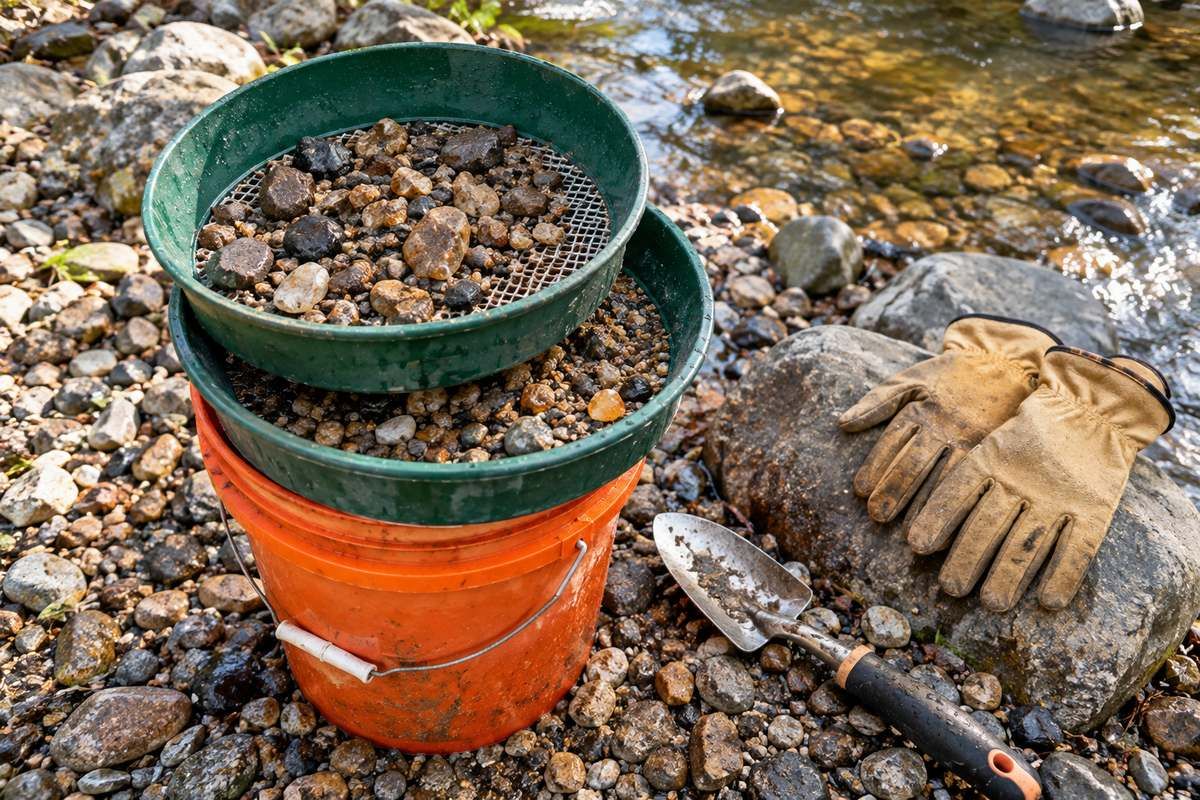
SE 13.25 Inch Stackable Classifier Set

Sifting screens sort gravel by size, making small agates, garnets, and fossils easier to spot. The SE stackable classifier set includes five stainless steel screens that stack on a standard 5-gallon bucket.
Shovel gravel into the top screen and shake it in water. The big rocks stay on top, and the small pieces drop to the screens below for a closer look.
- Screens: 5
- Mesh: 1/2, 1/4, 1/8, 1/12 and 1/20 in
- Width: 13.25 in
- Fits: over a 5-gallon bucket
Pick 09Hunting rocks that glow
Convoy S2+ 365nm UV Flashlight with Filter

Some rocks and minerals glow under ultraviolet light, like Yooperlites, a rock with glowing sodalite found on Lake Superior beaches. The Convoy S2+ 365nm is a small longwave UV light with a filter, which is the type fluorescent mineral collectors use.
Cheap 395nm lights give off a lot of visible violet light, which can hide a faint glow. A filtered 365nm light gives off much less. Never shine any UV light into your eyes or anyone else’s.
- Wavelength: 365nm longwave
- Filter: yes
- Water rating: IP65
- In the box: light, battery, charger
Small Gear That Makes a Big Difference
These are cheap or already in your house, but beginners often forget them.
- A 5-gallon bucket or a strong bag. Rocks are heavy. Carry less than you think you can.
- A spray bottle of water. Wetting a dusty rock shows its real color and pattern.
- Zip bags, egg cartons, and newspaper. Wrap fragile pieces so they do not chip each other on the way home.
- A permanent marker and masking tape. Number each bag to match your notebook.
- A streak plate and a steel nail. These two cheap tools help you identify what you find.
- Foam earplugs. Steel striking steel is loud, and you may hit a chisel many times in a row.
- A dust mask. Breaking quartz-rich rock makes fine dust.
- Water, sun protection, a first aid kit, and an offline map. Many good spots have no cell service.
What Beginners Can Skip
- Big sledgehammers. A 3 lb crack hammer covers almost everything a hobby collector needs.
- Cheap all-in-one “rockhounding kits”. Some come with light hammers and plastic loupes. Buy fewer, better tools.
- A regular claw hammer. It is not made for striking stone. Use a one-piece rock hammer instead.
- High-power loupes. 30x and 60x are hard to use outdoors. 10x is the most common choice for fieldwork.
- Unfiltered 395nm “black lights”. They give off a lot of violet light that can wash out a faint glow.
- Rock saws and lapidary machines. Wait until you have a pile of rocks you want to cut. To start shaping and shining rocks at home, a tumbler is the usual first step. See how to tumble rocks.
Tool Safety and Collecting Rules
Rockhounding tools help only if you use them safely and collect where it is allowed.
- Wear eye protection every time you strike rock. Look for the ANSI Z87.1 mark on the frame.
- Never hit two hammers together. Steel can chip off and fly. Never use a second hammer as a chisel.
- Keep people back. Chips can fly farther than you expect. Warn anyone nearby before you swing.
- Do not breathe rock dust. OSHA says crystalline silica dust comes from crushing and cutting stone and can cause silicosis, an incurable lung disease. Wet the rock or wear a mask when you break a lot of quartz-rich rock.
- Stay off steep, loose rock faces. Do not dig under an overhang.
On most Bureau of Land Management land you may collect reasonable amounts of rocks and minerals for personal use with hand tools, as long as you cause no more than minor surface disturbance. The BLM limit for petrified wood is 25 pounds plus one piece per day, and no more than 250 pounds per person per year. You cannot collect on an active mining claim without the claim holder’s permission, or in campgrounds and picnic areas.
National parks are different. Federal rules generally prohibit collecting rocks and minerals in park units. National forests, state lands, and private land each have their own rules, so check with the local office or owner first. Our rockhounding for beginners guide covers land types in more detail.
How to Carry and Care for Rockhounding Tools
- Carry the rock pick in a sheath or on your belt, with the pick pointed away from your body.
- Dry your tools after a wet trip. Wipe steel heads with a light coat of oil before storage to slow rust.
- Check hammer faces. Retire any hammer with a chipped or mushroomed face. Chips from a damaged face can fly.
- Keep the loupe in its case. A scratched lens is hard to see through.
- Clean your finds at home, not in the field. See how to clean rocks safely.
Rockhounding Tools FAQ
What tools do you need for rockhounding?
For a first trip, you need a rock hammer, safety glasses, work gloves, a 10x hand lens, a notebook, and a bucket or bag. A spray bottle of water is also useful. Add a crack hammer, pry bar, sifting screens, or a UV light later, based on where you collect.
What is the best rock hammer for beginners?
Most beginner guides start with a one-piece 22-ounce rock pick with a pointed tip, such as the Estwing E3-22P. A lighter 13-ounce hammer suits smaller hands and kids.
What magnification hand lens is best for rocks?
A 10x hand lens is the most common choice for geology fieldwork. Stronger lenses show a smaller area and are hard to hold steady outdoors.
Do I need a UV flashlight for rockhounding?
Only if you want to find fluorescent minerals, such as Yooperlites. For that, a 365nm longwave light with a filter works better than an unfiltered 395nm light.
Can I use rockhounding tools on public land?
On most BLM land, you may collect reasonable amounts for personal use with hand tools if you cause only minor surface disturbance. Collecting is generally not allowed in national parks. Check local rules before you dig.
The Bottom Line
The best rockhounding tools for beginners are simple. A one-piece rock pick like the Estwing E3-22P, sealed safety glasses, leather gloves, a 10x loupe, and a notebook will carry you through your first season. Add a crack hammer, a pry bar, screens, or a UV light once you know whether you like road cuts, creek gravel, geode beds, or night hunts. If you are still deciding where to go, start with where to find geodes or our beginner guide.