
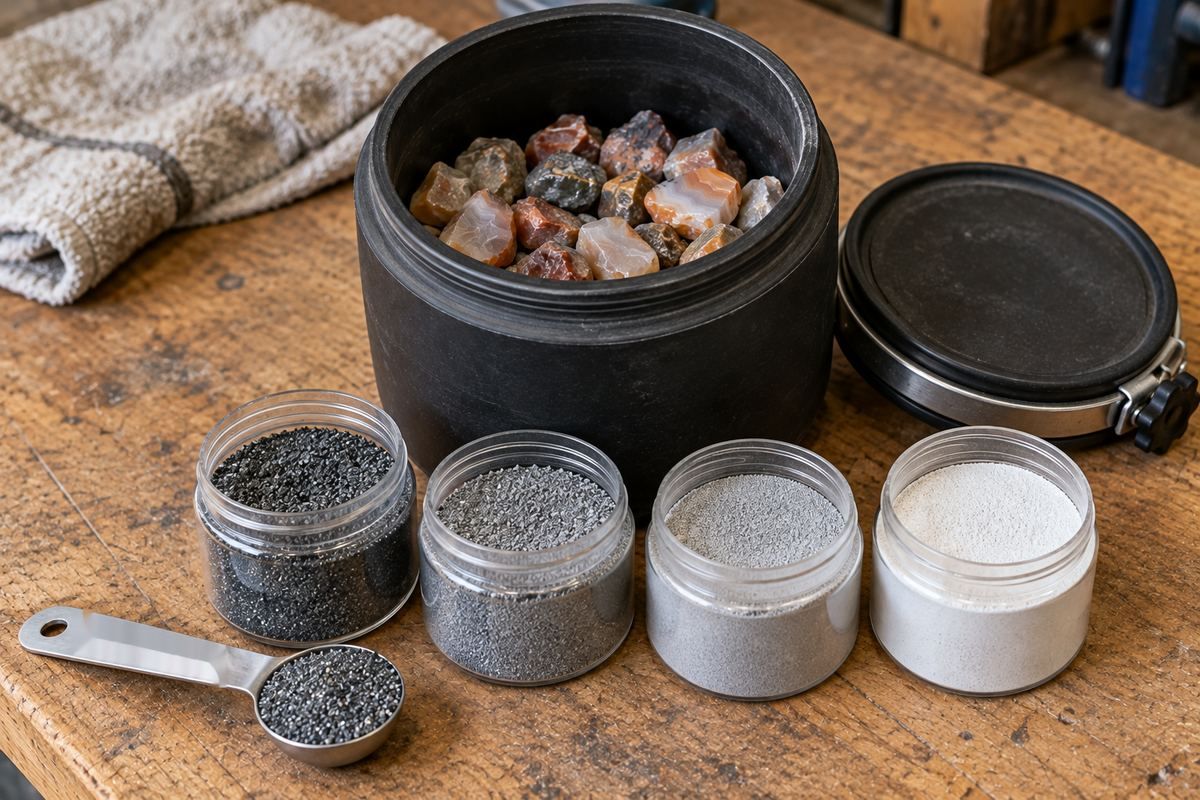
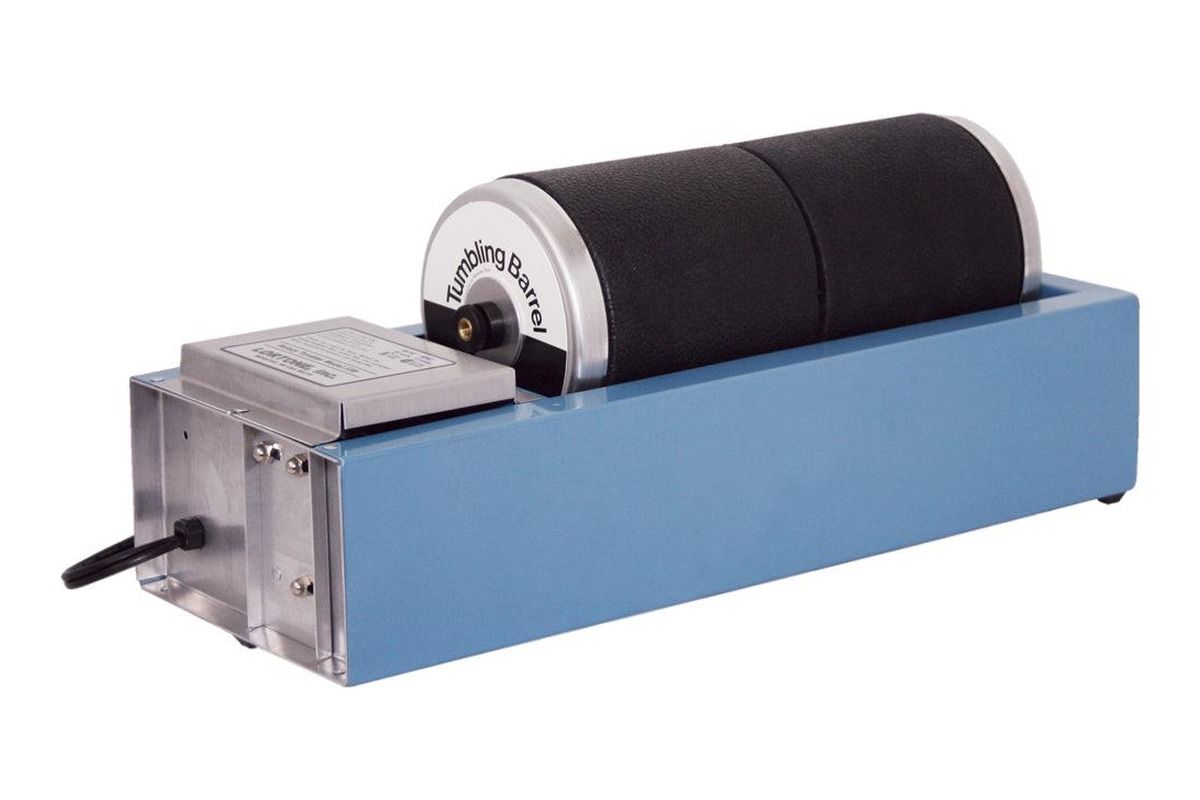
A small rotary tumbler with a 3-pound barrel takes about four weeks to turn rough rock into polished stones. In that time, it uses around 20 tablespoons of grit and polish and about 19 kilowatt-hours of power. At typical prices, that comes to roughly $10 for the whole batch, with most of it going to grit, not electricity. The rock tumbler calculator below runs the same numbers for your own tumbler, grit and power price.
Your numbers will change with your tumbler, how much rock you load and what you paid for grit. The calculator below works it out for your setup, stage by stage.
Rock Tumbler Batch Calculator
Pick your tumbler and see how much grit each stage needs, how long the batch takes and what it costs.
Change days, prices and power use
Your electric bill shows your rate. The grit prices are a starting point, so type in what you paid. The calculator counts a level tablespoon of grit as about 3/4 ounce, which is what silicon carbide grit weighs. Fine polish powders can weigh a little less.
| Stage | Grit per barrel | Days | Grit cost, all barrels |
|---|---|---|---|
| Electricity | – | – | – |
Rock tumbler calculator by Field to Polish · fieldtopolish.com
In This Guide
How to Use the Calculator
Start by picking your tumbler. The calculator fills in the barrel count, a sensible rock load, and the grit amounts from that maker’s own chart. If your tumbler isn’t listed, pick “Other rotary tumbler” and enter how many pounds of rock you have.
Tick the box for a second week of coarse grit if your rocks are sharp, chipped, or lumpy. Coarse is the shaping stage, and many tumblers run it twice before moving on. That one choice adds a week and a fresh charge of coarse grit.
Open “Change days, prices and power use” to make the result match your batch. Type in the price you paid per pound for each grit and your electric rate from your power bill. The defaults are only a starting point.
Where the Numbers Come From
Grit amounts. For Lortone and Kingsley North barrels, the calculator uses the amounts printed in their instructions. Lortone’s 3A sheet, for example, calls for 4 tablespoons each of coarse and medium grit and 6 tablespoons each of pre-polish and polish. Thumler’s grit chart comes in the printed booklet with each tumbler and isn’t posted online, so for Thumler’s and unlisted tumblers the calculator uses a common rule of 2 level tablespoons per pound of rock at every stage, from RockTumbler.com’s instructions.
Days. Each stage starts at 7 days, a common plan in tumbling guides. Lortone’s own sheets are looser. They say to check the stones after 2 to 3 days and rinse them after 5 to 7. If your stones still look rough at the end of a stage, run it longer and change the days to match.
Power use. Thumler’s A-R series tumblers measured just under 1 kilowatt-hour a day on a plug-in power meter, and the bigger Model B about 1.3. The Lortone figures are estimates worked back from a published cost per day: about 0.67 a day for the 3A and 33B, and about 1.25 for the QT series. Makers don’t print wattage for most models, so when no figure exists, the calculator starts at 0.99, the measured A-R number.
Electric rate. The default is 18 cents per kilowatt-hour, close to the average US home rate in 2026. Rates run much higher in some states, so use the number on your own bill.
Grit prices. The defaults are $4.80 per pound for coarse and medium silicon carbide, $7.00 for pre-polish, and $11.60 for aluminum oxide polish, based on a tumbling supplier’s cost breakdown. Kits and bulk bags can cost more or less. To turn tablespoons into cost, the calculator counts a level tablespoon as about 3/4 ounce, which is what silicon carbide grit weighs.

What a Typical Batch Costs
Here is what the calculator shows with its default prices, 7 days per stage, and no extra coarse week.
| Tumbler | Grit and polish | Grit cost | Power cost | Total |
|---|---|---|---|---|
| Lortone 3A, one 3 lb barrel | 20 Tbsp | $7.03 | $3.38 | $10.41 |
| Thumler’s A-R2, two barrels with 2 lb of rock each | 32 Tbsp | $10.57 | $4.99 | $15.56 |
| Lortone QT12, one 12 lb barrel | 88 Tbsp | $29.92 | $6.30 | $36.22 |
Polish costs the most per pound, so the last stage is often the priciest one even though it uses no more grit than the others. Power is the smaller cost. Even the big 12-pound tumbler uses only about $6 of electricity over four weeks at 18 cents a kilowatt-hour.
Why Tumbling Guides Give Different Amounts
If you have read more than one set of instructions, you have probably noticed the numbers don’t match. That isn’t a mistake. Each maker tunes its chart to its own barrels.
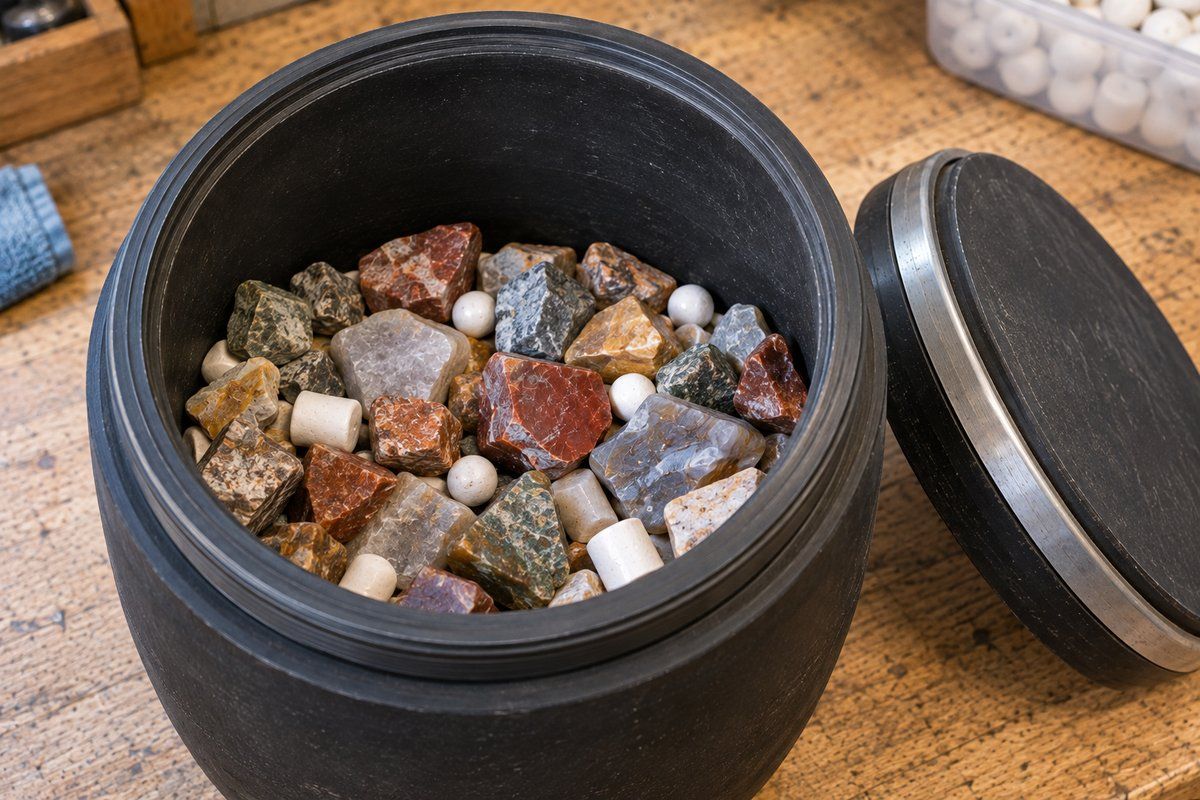
For example, Kingsley North’s chart calls for less polish than Lortone’s for the same-size barrel, and its polish step uses cerium oxide instead of aluminum oxide. Fill levels differ too. Lortone says to fill the barrel about 1/2 to 2/3 full of rock, while Kingsley North says 2/3 to 3/4. A barrel’s rating also isn’t the same as how much rock it holds. Thumler’s calls its A-R barrels 3-pound barrels, but they tumble about 2 pounds of rock.
The safest plan is to follow the chart that came with your tumbler. Use the per-pound rule only when you don’t have one. Our rock tumbler grit guide puts the main charts side by side.
Ways to Spend Less Per Batch
Sort your rock first. Stones of similar hardness tend to finish at about the same pace. A batch of agate and jasper won’t need extra weeks waiting for one soft or cracked stone. Our guide to the best rocks for tumbling covers what goes well together.
Fill the barrel properly. The chart amounts assume a proper load. A half-empty barrel uses the same grit and the same power for fewer stones. Some makers suggest adding plastic pellets to bulk up a light load.
Buy coarse grit in bulk. Coarse is the stage you’ll most likely repeat, so it is the one worth buying by the pound.
Check before you add a week. Rinse a few stones and check them dry before deciding whether a stage needs more time. If they look right, move on and save a week of power and grit.
Common Questions
Does a rock tumbler use a lot of electricity?
No. A small rotary tumbler uses somewhere around two-thirds to one kilowatt-hour a day. At 18 cents a kilowatt-hour, that is about 12 to 18 cents a day, or roughly $3.40 to $5 for a four-week batch.
How long does it take to tumble rocks from start to finish?
Plan on four to five weeks in a rotary tumbler. That is about a week per stage, plus an extra week of coarse grit for rough stones. Our step-by-step guide on how to tumble rocks walks through each stage.
Can I use less grit to save money?
A little less is fine if your barrel holds less rock than the chart assumes. Using much less grit in a full barrel can leave the stones short, and you may end up running the stage longer.
Does this work for vibratory tumblers?
No. Vibratory tumblers use far less grit per pound of rock and finish each stage in a day or a few days, so the rotary numbers don’t fit. Follow the chart that came with your vibratory tumbler.
Shopping for your first tumbler? Our rock tumbler buying guide compares barrel sizes and noise so you can match a machine to how much rock you want to tumble.