
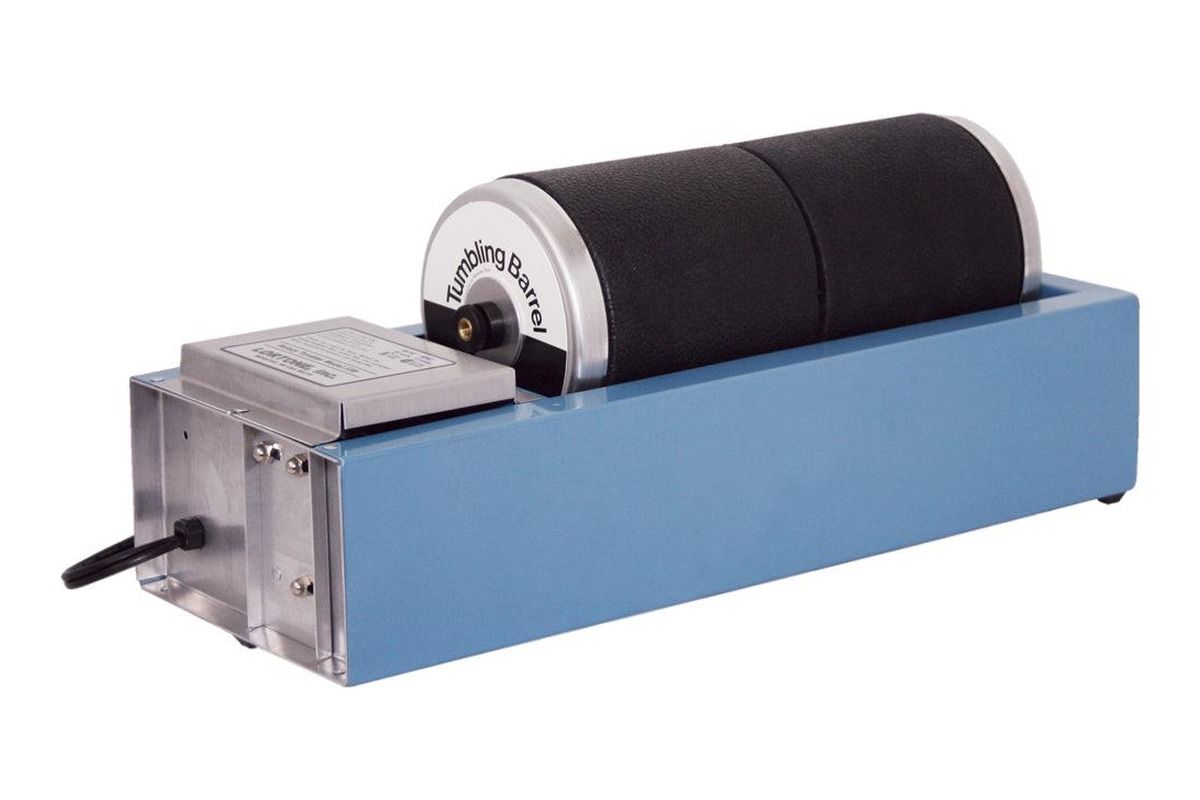
Buying a rock tumbler comes down to three choices: tumbler type, barrel size, and barrel material. This rock tumbler buying guide walks through each one. For most beginners, the right first machine is a rotary tumbler with a rubber barrel of about 3 pounds. It handles the standard four-step process, is quieter than a plastic-barrel toy, and holds enough rough (uncut rock) to make each month-long batch worthwhile. A vibratory tumbler is a good second machine, but usually not a first.
Field to Polish is a participant in the Amazon Services LLC Associates Program, an affiliate advertising program designed to provide a means for sites to earn advertising fees by advertising and linking to Amazon.com.
This guide is research-based. We have not run these tumblers ourselves. It draws on manufacturer instruction sheets, product listings, published measurements from a geologist-run tumbling retailer, government safety guidance, and notes where a number comes from a seller. For the full process once you own a tumbler, see our guide to how to tumble rocks.
In This Guide
Quick Picks
- Best for a serious beginner: Thumler’s Tumbler A-R2, a US-made rotary with two rubber barrels
- Best starter kit: National Geographic 3 lb Rock Tumbler Kit, with rough rock, grit and a timer in the box
- Best for large batches: Thumler’s Tumbler Model B, a 15-pound rotary with a rubber-lined steel barrel
- Best vibratory tumbler: Raytech TV-5, for polishing stones without changing their shape
Rotary or Vibratory: Which Type to Buy
A rotary tumbler turns a barrel slowly on two rollers, so the stones roll over each other with grit and water. A vibratory tumbler shakes a bowl, so the stones rub against each other instead of rolling. RockTumbler.com, a tumbling supplier run by geologist Hobart King, explains the practical result: rotary tumblers round rocks, while vibratory tumblers smooth and polish them without significantly changing their shape.
| Rotary | Vibratory | |
|---|---|---|
| Shape | Rounds stones | Keeps the original shape |
| Time per batch | About four weeks for the full process | Much shorter for the later steps, about two days each |
| Grit use | More | About half as much or less |
| Best for | Rough, broken rock from the field | Stones already rounded, or shapes you want to keep |
| Noise | Lower in RockTumbler.com’s readings | Louder in RockTumbler.com’s readings |
Rough rock from a creek bed or a bag of rough has sharp edges that need the coarse rotary stage to round them. That is why a rotary tumbler is the usual first purchase. A common approach uses a rotary tumbler for the coarse step and a vibratory tumbler for the later steps, which cuts total time to under two weeks.
What Size Rock Tumbler Should You Buy?
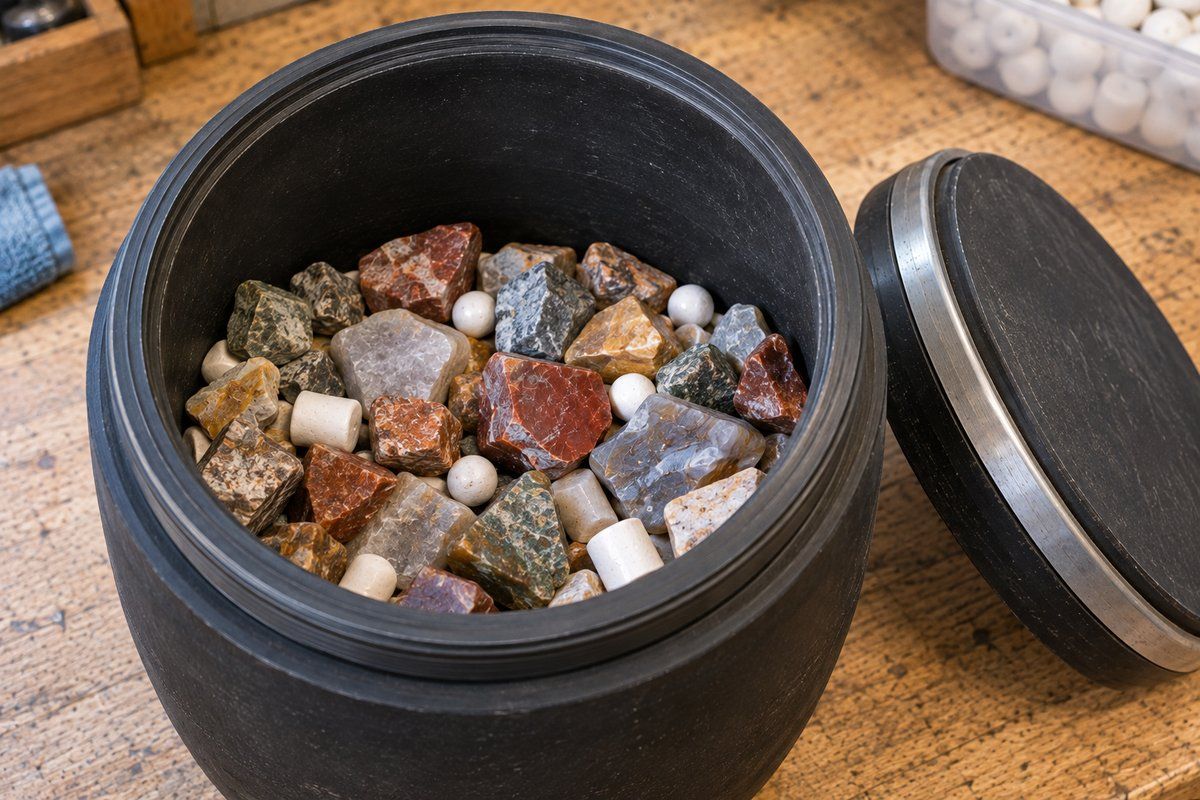
Tumbler barrels are rated in pounds, and the rating is the maximum load. Lortone’s rotary tumbler instruction sheet tells owners not to exceed the rated capacity and to fill the barrel about one-half to two-thirds full of rock, using assorted sizes for best results.
RockTumbler.com’s notes on the Thumler’s A-R2 say each 3-pound barrel usually takes a little under 2 pounds of rock at that fill level. By our math, with a rotary process of about four weeks, one 3-pound barrel finishes roughly a dozen batches a year if it runs without a break. A two-barrel machine doubles that, or lets you run two stages at once. If you collect a lot of rough, a larger barrel or a second barrel is worth considering.
You can add small ceramic media as filler if you do not have enough small rock to reach the fill line. Our rock tumbler media guide shows how much to add for each type of stone. Our tumbling guide covers loading in more detail.
Barrel Material and Noise
A rock tumbler runs day and night for weeks, so noise matters more than most buyers expect. If you want a quiet tumbler, choose one with a rubber barrel. The listings we checked give no decibel figures, so the most useful numbers come from RockTumbler.com, which sells tumblers and recorded sound levels at 3 feet. It recorded about 55 to 58 decibels for a Lortone 3A rotary, about 60 to 63 decibels for a Thumler’s A-R2 rotary, and about 72 to 74 decibels for a Thumler’s UV-10 vibratory. Treat those as one seller’s readings, not lab results.
Most people run their tumbler in a basement or garage. Do not cover a tumbler with a box to quiet it. Motors need air to stay cool. RockTumbler.com’s notes on the Thumler’s A-R2 say its motor runs very warm and shuts off automatically if it gets too hot.
Motor, Belts and Build Quality
A good rotary tumbler is built to run continuously. Lortone’s instruction sheet says its tumblers can run 24 hours a day for years with proper care and that the motor doesn’t need oiling. Belts are the main wear part. Lortone’s instruction sheets tell owners to keep the belt tight enough to turn the barrel without overtightening it, to tighten a slipping belt and to replace a broken one. Before you buy any tumbler, check that replacement belts and barrels are easy to find.
Lortone and Thumler’s are two established US makers of hobby-grade tumblers. Lortone publishes parts lists for its tumblers, and RockTumbler.com’s A-R2 notes cover replacing its belts and barrels. We list Thumler’s models below because they are sold on Amazon. We didn’t find a Lortone tumbler on Amazon when we checked.
Kit or Tumbler Only?
A starter kit, such as the National Geographic kit, bundles the tumbler with rough rock, grit, and extras like jewelry fastenings. That makes it an easy gift and a simple way to try the hobby. If it is for a child, see our guide to the best rock tumbler for kids. A hobby-grade tumbler is usually sold separately, so you buy grit and rough separately. Lortone, for example, says its tumblers can run 24 hours a day for years with proper care.
If you are not sure you will stick with the hobby, a kit is a low-risk start. If you already collect rough or know you want to tumble regularly, a hobby-grade rotary tumbler is the better long-term buy.
What You Will Buy After the Tumbler
Grit is the ongoing cost. The standard rotary process uses four steps: coarse silicon carbide (a very hard man-made abrasive) grit around 60/90, medium silicon carbide grit around 120/220, a fine pre-polish, and a final polish, in that order. Lortone’s sheet for a 1.5-pound barrel calls for 2 to 4 tablespoons of grit in each of the first two steps and 3 to 5 tablespoons in the last two. RockTumbler.com uses a rule of thumb of about two level tablespoons per pound of rock for each step. A larger barrel uses proportionally more grit per batch.
Want a number for your tumbler? Our rock tumbler calculator works out the grit and electricity cost of one batch.
Also plan for ceramic media, a sieve or colander, a bucket for slurry (the gritty mud that forms in the barrel), and spare belts.
What Rocks to Tumble First
Hardness matters because stones in one barrel should be close in hardness. The Mohs scale ranks minerals from 1 (talc) to 10 (diamond), and quartz sits at 7. Standard tumbling instructions were developed for agate, jasper, petrified wood and quartz, the most commonly tumbled materials. Softer stones mixed with them can grind away.
Avoid soft, fractured, or porous rock in your first batches. Malachite, for example, is a soft copper mineral with a hardness of only about 3.5 to 4, so it is not a beginner stone. Our rockhounding guide covers where to find good tumbling rough. Our guide to the best rocks for tumbling lists which stones to start with and which to avoid.
Safety and Grit Disposal
- Never pour slurry down a drain. Lortone’s instructions warn that rinse water can clog household drains. Hobby guides such as How to Find Rocks suggest letting the slurry settle in a container, pouring off the water and putting the thickened sludge in the trash.
- Keep dried slurry damp or bagged. Ground quartz contains crystalline silica (the mineral that quartz is made of), and the Occupational Safety and Health Administration (OSHA) explains that breathing respirable (fine enough to breathe in) silica can cause silicosis, an incurable lung disease. The National Institute for Occupational Safety and Health (NIOSH) notes that silicosis is not reversible but is preventable.
- Vent the barrel. Open the barrel now and then to let out gas that can build up during tumbling.
- Keep the cord and motor dry. Wipe up spills, keep the tumbler off wet floors and check the cord for damage.
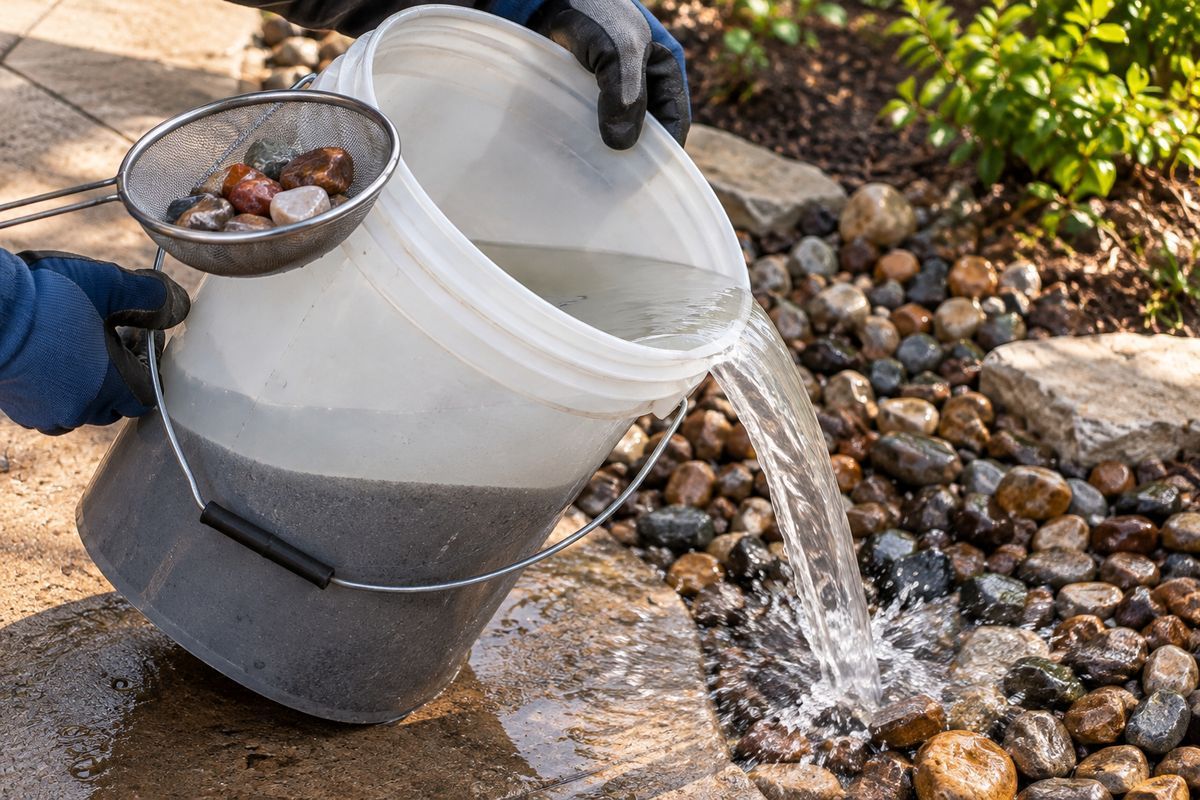
Our how to tumble rocks guide covers disposal step by step.
Rock Tumblers Worth Considering
We chose these from their Amazon listings, checked on October 10, 2026, to cover the main types of buyer. We have not tested them.
Pick 01Best for a serious beginner
Thumler’s Tumbler A-R2

The Thumler’s Tumbler A-R2 is a rotary tumbler with two rubber barrels that hold 6 pounds of rock between them, a metal frame and a Fasco motor, according to the listing, which also says it is made in the USA. Two barrels let you run two stages at once, or keep a polish barrel free of coarse grit. There is little buyer feedback on this listing so far.
Pick 02Best starter kit
National Geographic 3 lb Rock Tumbler Kit
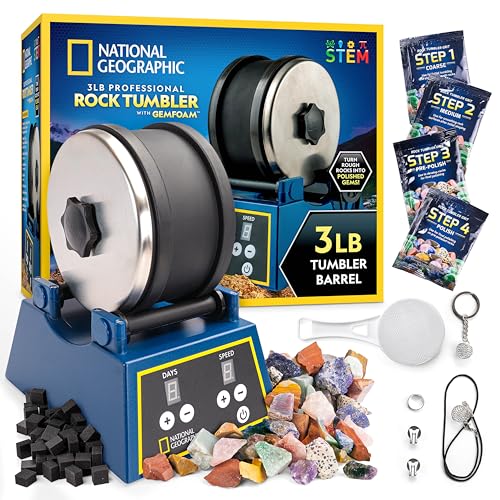
The National Geographic 3 lb Rock Tumbler Kit comes with 3 pounds of rough rock in nine types, grit, a strainer, a polishing foam and jewelry fastenings, according to the listing. It has a three-speed motor and a 9-day timer, and the listing describes a leak-proof barrel with a stainless steel lid that the listing says is 75 percent quieter overall than plastic barrels. It is the easiest way to try the hobby, but it is a kit tumbler rather than a hobby-grade machine.
Pick 03Best for large batches
Thumler’s Tumbler Model B

The Thumler’s Tumbler Model B is a 15 pound rotary tumbler with a steel hexagonal barrel and a removable rubber liner, according to the listing. It has a 115 volt fan-cooled motor with overload protection, and the listing notes a 5-year supplier warranty on the barrel and coating. It suits a collector with a lot of rough, but a single large barrel needs a lot of rough to fill and is wasteful for small batches.
Pick 04Best vibratory tumbler
Raytech TV-5

The Raytech TV-5 is a vibratory tumbler with a 0.05 cubic foot plastic bowl that runs on 115 volts, according to the listing. Like other vibratory tumblers, it polishes stones with little change in shape, so it works best as a second machine for stones a rotary tumbler has already shaped, or for pieces you want to keep angular.
Comparison Table
| Tumbler | Type | Capacity | Barrel | Best for |
|---|---|---|---|---|
| Thumler’s A-R2 | Rotary | 6 lb total, two barrels | Rubber | Serious beginners |
| National Geographic 3 lb Kit | Rotary | 3 lb | Leak-proof barrel, steel lid | Trying the hobby |
| Thumler’s Model B | Rotary | 15 lb | Steel with rubber liner | Large batches |
| Raytech TV-5 | Vibratory | 0.05 cu ft bowl | Plastic bowl | Polishing without rounding |
Details are from each Amazon listing as of October 10, 2026.
Rock Tumbler Buying Guide: Common Questions
What is the best rock tumbler for beginners?
A rotary tumbler with a 3-pound rubber barrel suits most beginners. A kit such as the National Geographic 3 lb kit is an easy way to try the hobby, and a hobby-grade rotary such as the Thumler’s A-R2 is made for regular use.
Is a rotary or vibratory tumbler better?
A rotary tumbler rounds rough, sharp-edged stones and is the usual first machine. A vibratory tumbler polishes faster and keeps the stones’ shape, so it works best as a second machine.
How full should a rock tumbler barrel be?
Lortone’s instructions say to fill the barrel about one half to two thirds full with assorted sizes, and never above the rated capacity.
How loud is a rock tumbler?
Manufacturers rarely publish figures. One tumbling supplier measured about 55 to 63 decibels at 3 feet for the rotary tumblers it tested and over 70 decibels for a vibratory model. The same supplier says most people run them in a basement or garage.
Can I pour rock tumbler water down the drain?
No. Lortone warns that tumbler rinse water clogs household drains. Hobby guides suggest letting it settle, pouring off the water and putting the thickened sludge in the trash.
Bottom Line
Use this rock tumbler buying guide as a checklist: choose rotary first, size the barrel to how much rough you collect, and favor rubber barrels for lower noise. A starter kit is a fine way to try the hobby, and a hobby-grade rotary like the Thumler’s A-R2 is the better long-term buy. Add a vibratory tumbler later if you want faster polishing or want to keep stones’ shapes. Whatever you buy, keep slurry out of the drain and dust out of the air.